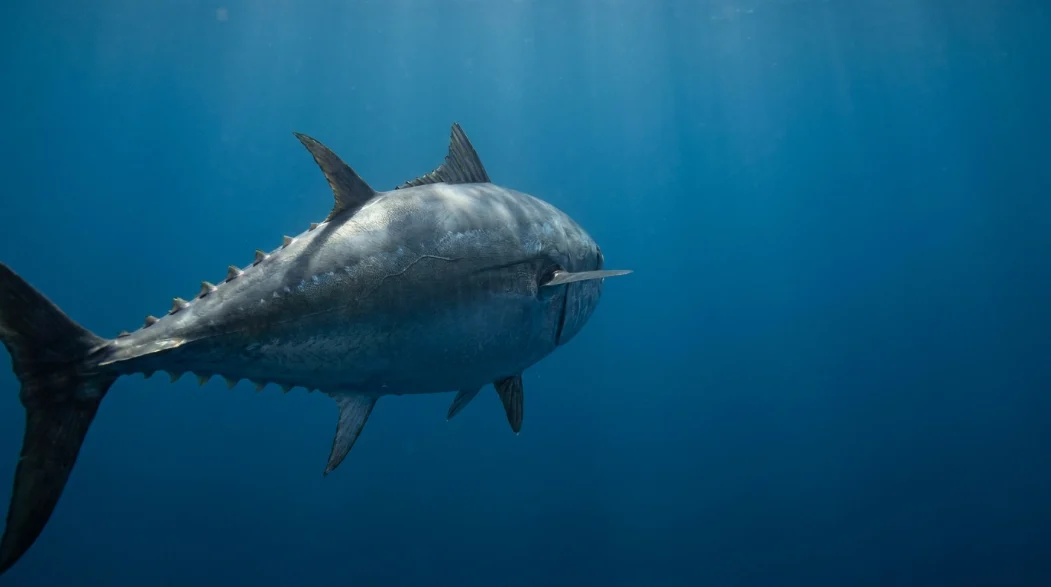
The finlet meaning is simple: a finlet is a small, separate fin found behind the main dorsal or anal fin of some fish. Finlets are especially noticeable in fast-swimming fish such as tuna, mackerel, and some related species.
Unlike the large fins that most people immediately recognize, finlets are much smaller. They appear as a series of individual little fins along the rear part of a fish’s body, usually between the main dorsal or anal fin and the tail.
Their small size can make them easy to overlook, but they have an interesting role in fish anatomy and movement.
What Is a Finlet?
A finlet is a small fin located separately from a larger fin on certain fish. The word itself is simply formed from fin + -let, with “-let” suggesting something small.
In fish anatomy, finlets are usually arranged in a row. They are most commonly seen near the tail, behind the dorsal and anal fins.
A good example is a tuna. If you look closely at a tuna, you can see several small fins running along the top and bottom of its body before the caudal fin, or tail fin.
These structures are not simply miniature versions of the main fins. Their position, shape, and arrangement are part of the overall body design that helps certain fish move efficiently through water.
Finlet Definition in Biology
In biological terms, a finlet is a small, discrete fin positioned posterior to a main dorsal or anal fin in some fishes.
“Posterior” means toward the rear of the body.
This distinction is useful because a finlet is not just any small fin. The term generally refers to the small, separate fins arranged behind the main dorsal or anal fins.
The exact number and appearance of finlets vary among species.
Finlet vs. Fin
A fin is a broader anatomical term. Fish have several types of fins, including dorsal, pectoral, pelvic, anal, and caudal fins.
A finlet is a particular type of small, separate fin found in certain fish.
| Feature | Fin | Finlet |
|---|---|---|
| Meaning | General term for a fish appendage | Small separate fin |
| Size | Can be large or small | Usually small |
| Location | Various parts of the body | Commonly behind dorsal or anal fins |
| Occurrence | Very widespread among fish | Found in particular groups |
| Example | Dorsal fin | Tuna finlet |
So, every finlet is a fin, but not every fin is a finlet.
Where Are Finlets Found on a Fish?
Finlets are typically found toward the rear of the body.
In fish that possess them, you may see a row of small fins between the main dorsal fin and the tail. Similar structures can occur between the anal fin and the tail on the underside of the fish.
This creates a pattern like:
Main dorsal fin → finlets → caudal peduncle → tail fin
On the underside, the arrangement can be:
Anal fin → finlets → caudal peduncle → tail fin
The caudal peduncle is the narrower section of the body connecting the main body to the tail fin.
What Is the Function of Finlets?
The exact function of finlets can vary among fish, and their role is connected to the hydrodynamics of swimming.
Finlets may influence the flow of water around the rear portion of the body and help regulate movement near the tail.
Fast-swimming fish have bodies adapted to reduce resistance and control water flow. Small structures such as finlets form part of this specialized design.
Finlets and Swimming
Fish generate movement by interacting with water through their body and fins.
As a fish moves, water flows around its body and toward the tail. The fins near the rear can affect this flow.
In species such as tuna, which are built for sustained, powerful swimming, finlets are positioned close to the tail and work as part of a larger hydrodynamic system.
It is more accurate to think of finlets as components of a fish’s swimming design rather than saying they act like tiny independent propellers.
Finlets and Stability
Finlets may also contribute to controlling water flow and maintaining efficient movement.
For a fast-swimming fish, even small changes in water flow can matter. The arrangement of fins around the rear of the body can help the fish maintain controlled movement as it travels through water.
This is one reason finlets are particularly interesting in fish with highly streamlined bodies.
Which Fish Have Finlets?
Finlets are strongly associated with several groups of fast-swimming fish.
Some familiar examples include:
- Tuna
- Mackerel
- Bonito
- Some related members of the mackerel and tuna family
- Certain other fish with specialized rear-fin arrangements
The exact arrangement differs between species.
Tuna Finlets
Tuna provide one of the clearest examples.
A tuna’s body is designed for efficient, powerful swimming. Behind its dorsal and anal fins are rows of small finlets leading toward the tail.
These finlets are easy to see in many tuna species and are one of the visual features that distinguish their body shape.
Tuna also have a deeply streamlined body, a narrow caudal peduncle, and a powerful tail. The finlets are part of this broader swimming adaptation.
Mackerel Finlets
Mackerel also commonly have small finlets near the rear of the body.
Their body shape is streamlined, allowing them to move efficiently through the water. The finlets appear as small individual structures between the main fins and the tail.
If you see a fish with a series of tiny fins along the upper and lower rear body, mackerel or a related fish may be a good possibility.
Why Do Some Fish Have Finlets?
Fish have evolved different body shapes and fin arrangements to suit their environments and swimming styles.
Finlets are particularly common in fish that have evolved for active swimming.
A fast-moving fish benefits from a body that handles water efficiently. Its fins, body shape, scales, tail, and muscle arrangement all work together.
This gives us an important point: finlets should not be viewed in isolation.
A tuna’s swimming ability does not come from its finlets alone. Its streamlined body, strong muscles, tail structure, and other adaptations all contribute to its performance.
Finlets and Fish Locomotion
Fish locomotion is the way fish move through water.
The tail and body provide much of the force used for forward movement in many actively swimming fish. Other fins help with steering, stability, braking, and positioning.
Finlets are positioned close to the area where water flow eventually reaches the tail. Their presence can influence the flow around this part of the body.
This makes finlets an interesting example of how even relatively small anatomical structures can have a place in a larger biological system.
Are Finlets the Same as Tail Fins?
No.
A tail fin, scientifically called the caudal fin, is the large fin at the rear of the fish. It is one of the most important structures involved in propulsion for many fish.
A finlet is much smaller and is located separately from the main tail fin.
For example, in tuna:
Dorsal fin → finlets → caudal peduncle → caudal fin
The finlets are therefore located before the tail fin, not at the end of the body.
Finlet Pronunciation
Finlet is pronounced approximately:
FIN-let
The first part sounds like the word “fin,” followed by “let.”
The plural form is:
finlets
So you can say:
- “This fish has several finlets.”
- “The finlet is located near the tail.”
Finlet Singular and Plural
The singular form is finlet.
The plural form is finlets.
| Form | Word |
|---|---|
| Singular | finlet |
| Plural | finlets |
For example:
Singular: “A finlet is a small separate fin.”
Plural: “Tuna have several finlets near the tail.”
Finlet in a Sentence
Here are a few natural examples:
- “The tuna has several small finlets behind its dorsal fin.”
- “Finlets are visible along the rear part of the fish.”
- “The biologist examined the fish’s finlets and tail structure.”
- “Mackerel are known for their streamlined bodies and finlets.”
- “The small finlets form a row between the main fin and the tail.”
These examples show how the word is normally used in a biological or descriptive context.
Related Fish Fin Terms You Should Know
Understanding finlet meaning becomes easier when you know the names of the major fish fins.
Dorsal Fin
The dorsal fin is located on the upper side of the fish.
It can help with stability and control while the fish swims.
Anal Fin
The anal fin is located on the underside of the fish, toward the rear.
Like the dorsal fin, it can contribute to stability and controlled movement.
Pectoral Fins
Pectoral fins are generally located on the sides of the fish, near the front portion of the body.
They are important for steering and maneuvering.
Pelvic Fins
Pelvic fins are located on the underside of the body. Their exact position varies among different fish groups.
Caudal Fin
The caudal fin is the tail fin.
It is particularly important for propulsion in many swimming fish.
A Simple Way to Remember Finlet Meaning
Think of the word in two parts:
Fin + let = a little fin
That is a useful memory trick, but the biological definition is more specific. A finlet is a small, separate fin associated with particular fish, commonly arranged behind the main dorsal or anal fins.
So if someone asks, “What is a finlet?” a clear answer is:
A finlet is a small separate fin found near the rear of certain fish, often in rows between the main dorsal or anal fin and the tail.
Frequently Asked Questions
What does finlet mean?
A finlet is a small, separate fin found on certain fish. Finlets are commonly arranged near the rear of the body, behind the main dorsal or anal fins and before the tail.
What is a finlet in fish?
A finlet is a small fin that occurs in some fish, particularly fast-swimming species such as tuna and mackerel. Several finlets may appear in a row near the tail.
What is the purpose of finlets?
Finlets are associated with controlling and influencing water flow around the rear of the fish. They form part of the overall anatomical design used for efficient swimming and movement.
Which fish have finlets?
Tuna, mackerel, bonito, and some related fish are well-known examples. The number and arrangement of finlets vary between species.
Are finlets and fins the same thing?
A finlet is a type of fin, but the terms are not interchangeable. “Fin” is a broad anatomical term, while “finlet” specifically refers to a small, separate fin found in certain fish.
Are finlets the same as a tail fin?
No. The tail fin is the caudal fin, which is the large fin at the end of the fish. Finlets are smaller structures positioned before the tail in fish that have them.
What is the plural of finlet?
The plural of finlet is finlets.
How do you pronounce finlet?
Finlet is pronounced FIN-let, with the first syllable sounding like the word “fin.”
Where are finlets located?
Finlets are generally located toward the rear of the fish, often between the main dorsal or anal fin and the caudal fin.
Final Takeaway
The finlet meaning refers to a small, separate fin found near the rear of certain fish. They are especially noticeable in tuna, mackerel, bonito, and related species.
Although finlets are much smaller than the main fins, their position is significant. They are part of the specialized body design that helps some fish manage water flow and move efficiently.
The easiest way to remember the term is simple: a finlet is a small fin, but in biology it specifically describes the small separate fins seen in certain fish, often arranged in rows near the tail.
Read More Related Articles:
- Humility Meaning | The Quiet Strength Behind Confidence …
- Demisexual Meaning | What It Really Means to Feel Attraction …
- Surreal Meaning | The Strange, Dreamlike World Where …
