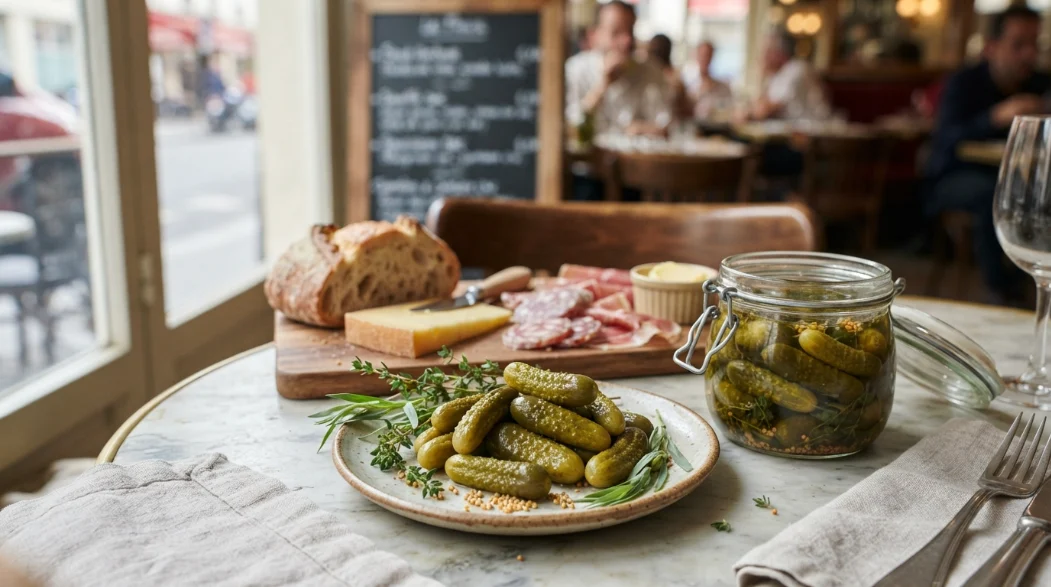
If you have ever seen the word cornichon on a restaurant menu, pickle jar, or French recipe, you may have wondered what it means. The cornichon meaning is quite simple: a cornichon is a small, crisp cucumber that has been pickled, traditionally in vinegar with salt, herbs, and spices.
Cornichons are strongly associated with French cuisine. They are usually small, firm, and noticeably tangy, with a sharp sour flavor that makes them a popular partner for cheese, meats, sandwiches, pâté, and charcuterie.
The word cornichon is French. In everyday English, it is commonly used for this particular type of French-style pickle.
Although cornichons look similar to gherkins and other small pickles, they are not always prepared in exactly the same way. Their size, texture, pickling method, and especially their sharp, acidic taste help give them their distinctive character.
What Does Cornichon Mean?
Cornichon is a French word that refers to a small pickled cucumber, especially the type traditionally prepared as a crisp, sour pickle.
In English, the simplest translation is:
Cornichon = a small French-style pickled cucumber
The word is commonly associated with food rather than a particular type of fresh cucumber served raw.
Cornichons are generally picked when the cucumbers are small. They are then preserved in an acidic pickling liquid, often based on vinegar, along with salt and flavoring ingredients such as herbs and spices.
This produces the characteristic combination of:
- Small size
- Firm texture
- Crunchy bite
- Strong acidity
- Tangy flavor
- Savory seasoning
So, if someone asks “What is a cornichon?”, the easiest answer is simply a small, crisp French pickle.
What Does Cornichon Mean in French?
In French, cornichon refers to the small cucumber used as a pickle and, by extension, the pickle itself.
The word can also have an informal figurative use in French. Depending on the context, cornichon can be used to describe someone as a silly person, fool, or simpleton.
That secondary meaning is quite different from its food meaning.
For example, on a French menu, a reference to cornichons is about pickles. In casual conversation, the same word can sometimes be used jokingly to describe a person.
For a food-related search, however, the culinary meaning is the one most people are looking for.
What Is a Cornichon Made From?
A traditional cornichon starts with a small cucumber. The cucumber is preserved through pickling, which changes both its flavor and texture.
Common ingredients can include:
| Ingredient | Purpose |
|---|---|
| Small cucumbers | Main ingredient |
| Vinegar | Provides acidity and helps preserve the pickle |
| Salt | Adds flavor and supports the pickling process |
| Water | Used to balance the pickling liquid |
| Dill | Adds a fresh herbal note |
| Mustard seeds | Adds warmth and spice |
| Tarragon | Gives a distinctive herbal flavor |
| Peppercorns | Adds mild spice |
| Garlic | Adds savory flavor |
Recipes vary, so not every jar contains all of these ingredients.
Some cornichons are particularly sharp and acidic, while others have a more balanced combination of sour, salty, herbal, and slightly spicy flavors.
What Do Cornichons Taste Like?
Cornichons are best known for their sharp, tangy, sour flavor.
They usually have a much more pronounced acidic character than a mild cucumber pickle. Their small size also helps them maintain a firm, crunchy texture.
A typical cornichon may taste:
- Sour
- Tangy
- Salty
- Crisp
- Herbal
- Slightly spicy
- Refreshingly acidic
That strong flavor is part of the reason cornichons work so well alongside rich foods.
For example, imagine eating a slice of fatty pâté with bread. A bite of cornichon can provide acidity and crunch, creating a contrast that keeps the combination from feeling too heavy.
This is one of the most useful ways to understand the role of a cornichon. It is not simply there to add another flavor. Its acidity can provide balance.
Are Cornichons Pickles?
Yes. Cornichons are pickles.
More specifically, they are small pickled cucumbers traditionally associated with French cuisine.
The word pickle describes a broad category of foods preserved through pickling. Cornichons belong to that category, but they have their own traditional style.
Think of it this way:
Pickle is the broad category.
Cornichon is a particular type of small, French-style pickled cucumber.
This is similar to the way many food terms describe a specific variety within a larger food category.
Cornichon vs. Gherkin
One of the most common questions about cornichons is how they differ from gherkins.
The two terms can overlap, and usage varies by country. Both can refer to small cucumbers that are pickled, so the distinction is not always perfectly clear.
Still, there are useful differences to keep in mind.
| Cornichon | Gherkin |
|---|---|
| Strongly associated with French cuisine | Used broadly in English-speaking food contexts |
| Usually small and crisp | Can vary in size |
| Often has a sharp, sour flavor | Flavor depends heavily on preparation |
| Commonly served with French dishes | Common in many types of pickle products |
| Often associated with vinegar and savory herbs | Can be sweet, sour, spicy, or dill-style |
The biggest practical difference is often style rather than a completely different vegetable.
A cornichon is generally recognized by its small size, firm texture, and sharp French-style pickling profile.
Are Cornichons Cucumbers?
Yes. Cornichons are made from small cucumbers.
The important distinction is that a cornichon in the culinary sense refers to the pickled product, not simply a fresh cucumber sitting in a bowl.
Cucumbers belong to the species Cucumis sativus. Small cucumbers can be harvested and prepared specifically for pickling.
Once they are placed in a pickling solution and properly preserved, they become the crisp, acidic food commonly called cornichons.
How Are Cornichons Used in Food?
Cornichons are usually eaten as an accompaniment rather than as the main ingredient of a dish.
Their strongest role is adding acid, crunch, and contrast.
With Charcuterie
Cornichons are a classic partner for charcuterie.
A board containing cured meats, pâté, cheese, bread, and other rich foods benefits from something sharp and acidic. A cornichon provides that contrast.
With Cheese
The sourness of a cornichon can work particularly well with rich or creamy cheeses.
The pickle cuts through the richness and gives each bite a fresher character.
With Sandwiches
Cornichons can be served alongside sandwiches or included in dishes where their acidity complements meat, cheese, or creamy sauces.
They are especially useful when a meal needs something crisp and tangy.
With Pâté
This is one of the most classic combinations.
Pâté has a rich and smooth texture. Cornichons provide a crunchy, acidic counterpoint.
The contrast is what makes the pairing work.
In Salads and Sauces
Chopped cornichons can also be used in salads, sauces, and spreads.
They can contribute:
- Crunch
- Acidity
- Saltiness
- Herbal flavor
- Pickled character
Their intense flavor means a small amount can make a noticeable difference.
Why Are Cornichons Served With Rich Foods?
There is a simple reason: contrast.
Rich foods often contain substantial amounts of fat and have soft or creamy textures. Cornichons bring acidity and crunch into the same bite.
For example:
Pâté + bread + cornichon
gives you:
rich + soft + sharp + crunchy
That contrast keeps the overall bite more interesting.
The same principle works with cheese, cured meats, sandwiches, and other foods.
This is why cornichons are more than a decorative pickle sitting beside a meal. Their acidity can play an important role in the overall balance of a dish.
What Is the Difference Between a Cornichon and a Regular Pickle?
“Regular pickle” can mean many things, so there is no single standard pickle that all cornichons can be compared with.
A typical supermarket pickle might be:
- Large
- Mild
- Sweet
- Dill-flavored
- Garlic-heavy
- Sour
- Soft or very crunchy
Cornichons are usually smaller, firmer, and more sharply tangy.
The flavor is often more intense than what people expect from a mild cucumber pickle.
If you normally eat large dill pickles, a cornichon may taste noticeably more acidic and concentrated.
How Do You Pronounce Cornichon?
The French pronunciation is approximately:
kor-nee-SHON
The final part sounds similar to the French pronunciation of -chon, rather than being pronounced exactly as an English word might suggest.
If you are ordering food in a French restaurant, hearing or saying the word correctly can make the menu term much easier to recognize.
The plural form is cornichons.
Cornichon in a Sentence
Here are a few natural examples of how the word can be used:
- “The chef served cornichons with the pâté.”
- “I added chopped cornichons to the sandwich.”
- “These cornichons are small but very tangy.”
- “The cheese board came with French cornichons.”
- “Cornichons add a sharp flavor to rich foods.”
These examples show that cornichon is mainly used as a food noun in English.
Are Cornichons Healthy?
Cornichons can fit into a balanced diet, especially as a flavorful accompaniment.
They are generally low in calories, but their salt content can be significant, depending on the product and serving size.
Their nutritional profile depends on the ingredients and preparation method, so it is useful to check the label when buying packaged cornichons.
A few cornichons can add plenty of flavor without requiring a large serving.
The key point is moderation, particularly for people who need to monitor their sodium intake.
How to Choose Good Cornichons
If you are buying cornichons for the first time, look for a product with a few characteristics.
Check the Texture
A good cornichon should generally have a firm, crisp bite rather than feeling excessively soft.
Consider the Acidity
If you enjoy sharp pickles, choose a variety described as sour, tart, or vinegar-forward.
Look at the Ingredients
Herbs and spices can significantly change the flavor. Dill, mustard seeds, tarragon, peppercorns, and garlic can all create different profiles.
Think About What You Will Serve Them With
A strongly acidic cornichon can be excellent with rich meats and pâté, while a milder version may work better in sandwiches or salads.
Cornichon vs. Cucumber: What Is the Difference?
A fresh cucumber and a cornichon may begin with the same basic vegetable, but they are very different foods.
A fresh cucumber is:
- Juicy
- Mild
- Fresh
- Crisp
- Usually eaten raw or cooked
A cornichon is:
- Pickled
- Sour
- Salty
- Tangy
- Firm
- Preserved
The pickling process transforms the cucumber’s flavor and gives it a much stronger culinary identity.
Common Misunderstandings About Cornichons
Cornichons Are Not a Completely Different Vegetable
They are pickled cucumbers, not a mysterious separate vegetable.
Cornichons Are Not Always Identical
Different producers use different vinegar, herbs, spices, and preparation methods. Taste can vary considerably from one jar to another.
Cornichon Does Not Only Mean “Pickle” in Every Context
In French, the word can also have an informal figurative meaning referring to a foolish or silly person. Context determines the intended meaning.
Cornichons Are Not Only for French Recipes
Although strongly associated with French cuisine, they can be used in sandwiches, salads, sauces, cheese boards, and many other dishes.
Frequently Asked Questions
What does cornichon mean?
Cornichon means a small, crisp French-style pickled cucumber. It is usually preserved in vinegar with salt, herbs, and spices.
Is a cornichon a pickle?
Yes. A cornichon is a type of pickle made from a small cucumber. It is particularly associated with French cuisine and a sharp, tangy flavor.
What does cornichon mean in French?
In French, cornichon refers to a small pickled cucumber. Informally, it can also describe someone who is foolish or silly, depending on the context.
Is a cornichon the same as a gherkin?
They are closely related terms, and both can refer to small pickled cucumbers. However, cornichon is strongly associated with the French style of small, crisp, sharply flavored pickles.
What do cornichons taste like?
Cornichons typically taste sour, tangy, salty, and slightly herbal. They are known for their crisp texture and strong acidity.
Are cornichons cucumbers?
Yes. Cornichons are made from small cucumbers that have been pickled.
What are cornichons served with?
They are commonly served with pâté, charcuterie, cheese, sandwiches, and other rich foods. Their acidity provides a refreshing contrast.
How do you pronounce cornichon?
A close English approximation of the French pronunciation is kor-nee-SHON.
Are cornichons the same as regular pickles?
Not exactly. Cornichons are a specific style of small, crisp, tangy pickle. “Pickle” is a much broader term covering many different types of pickled vegetables and cucumber preparations.
Can you eat cornichons by themselves?
Yes. They can be eaten directly from the jar as a snack or side, although their strong sour and salty flavor makes them especially useful alongside other foods.
Final Takeaway
The simplest cornichon meaning is a small French-style pickled cucumber. Cornichons are known for their firm texture, sharp acidity, salty flavor, and refreshing crunch.
They are especially popular with charcuterie, pâté, cheese, sandwiches, and other rich foods, where their acidity helps balance heavier flavors.
And while cornichons are closely related to gherkins and other pickles, their small size and distinctive French-style preparation give them their own identity. Once you know what the word means, spotting cornichons on a French menu or food label becomes much easier.
Read More Related Articles:
- Serendipity Meaning | The Beautiful Art of Finding What You …
- Limerence Meaning | What It Is, How It Feels, and Why It Can …
- Lobotomy Meaning | What It Was, Why It Changed Medicine …
