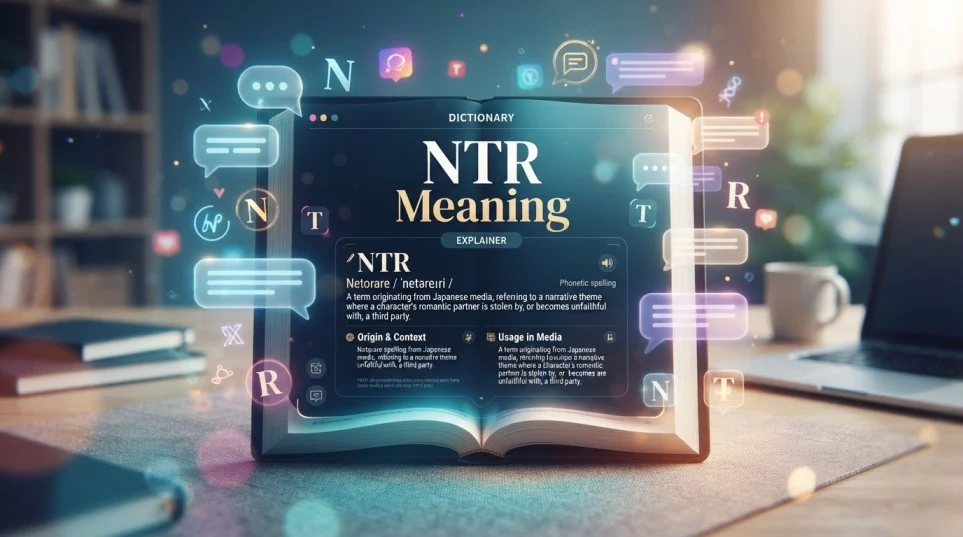
If you searched for ntr meaning, you probably came across the term in an anime, manga, gaming community, social media post, or online discussion and wondered what those three letters actually mean. NTR is commonly short for “netorare,” a Japanese term used to describe a fictional situation involving romantic or sexual betrayal, often where someone’s partner becomes involved with another person.
The term is especially common in anime, manga, visual novels, games, and online fandoms. It can describe a specific story theme or a plot element rather than simply meaning “cheating.”
The important part is context. NTR is often used loosely online, and people sometimes apply the label to any story involving jealousy, infidelity, or a romantic rival. In Japanese media terminology, however, netorare has a more specific narrative meaning.
What Does NTR Mean?
NTR is an abbreviation of netorare, written as 寝取られ in Japanese.
In simple English, the term generally refers to a fictional scenario where a character loses their romantic or sexual partner to another person. The emotional experience of the character who is left behind is an important part of the concept.
For example, imagine a fictional story about two characters who have been dating for years. Another character enters their relationship, and one partner becomes involved with that newcomer. The original partner discovers what happened and experiences jealousy, heartbreak, humiliation, or a sense of loss.
That kind of storyline may be described as NTR.
The term is strongly associated with Japanese pop culture, particularly anime, manga, visual novels, and related online communities.
NTR in Simple Words
A simple way to understand the term is:
NTR describes a fictional relationship-betrayal scenario where someone’s romantic or sexual partner is taken by, or becomes involved with, another person.
The emotional perspective of the person losing their partner is often central to the story.
What Does NTR Stand For?
NTR commonly stands for netorare.
It is not originally an English acronym. Instead, NTR is an abbreviated romanized form used by online communities to refer to the Japanese term.
| Term | Meaning |
|---|---|
| NTR | Common abbreviation for netorare |
| Netorare | Japanese term associated with romantic or sexual partner betrayal |
| 寝取られ | Japanese writing for netorare |
| Netori | A related term involving the person taking another person’s partner |
| Netorase | A related concept with a different relationship dynamic |
These related words can look almost identical to someone unfamiliar with Japanese terminology, but they do not always describe the same narrative perspective.
NTR Meaning in Anime
When people ask about NTR meaning in anime, they are usually talking about a storyline built around romantic betrayal, a partner being taken by another character, or the emotional consequences of that event.
NTR can appear as a major theme or as a plot element inside a larger story.
For instance, an anime storyline might introduce:
- A long-term romantic couple
- A third character who becomes interested in one partner
- Emotional distance between the original couple
- A betrayal or change in the relationship
- Jealousy or heartbreak from the other partner
- Consequences following the relationship change
Not every anime containing cheating or a love triangle should automatically be called NTR. Online users sometimes use the word broadly, but the traditional concept has a stronger focus on the person whose partner is taken away and the emotional experience surrounding that loss.
NTR Meaning in Manga
The meaning is similar in manga.
NTR manga generally refers to fictional stories involving relationship betrayal or the loss of a romantic or sexual partner to another person.
The storytelling can vary significantly. Some works focus heavily on the emotional reaction of the betrayed character. Others may concentrate more on the relationship itself, the third person, or the psychological tension created by the situation.
This is one reason simply translating NTR as “cheating” can be incomplete.
Cheating describes an action.
NTR can describe a broader fictional relationship dynamic and the emotional perspective surrounding that dynamic.
Is NTR the Same as Cheating?
Not exactly.
The two concepts overlap, but they are not interchangeable.
| Concept | Basic idea |
|---|---|
| Cheating | Being unfaithful to a romantic or sexual partner |
| Love triangle | Three people are romantically connected or interested in each other |
| Betrayal | Breaking someone’s trust |
| NTR | A fictional relationship dynamic centered around a partner being taken or becoming involved with someone else |
| Jealousy | Emotional response to perceived romantic competition or loss |
A story can contain cheating without being described as NTR.
Likewise, people may call something NTR even when the exact situation does not neatly fit the traditional meaning.
This distinction matters when reading discussions online because fandom terminology is often used casually.
Why Is NTR So Common in Online Discussions?
NTR has become a recognizable piece of internet and fandom vocabulary.
Anime and manga communities often use short labels to communicate a complicated story concept quickly. Instead of explaining an entire plot, someone might simply say that a story contains an NTR element.
That makes the term useful as a content or trope label.
However, it is also a word that can trigger strong reactions because the stories associated with it often involve betrayal, jealousy, rejection, or emotional loss.
Online conversations can therefore become confusing when one person uses NTR as a precise genre term and another uses it as a general insult for any romantic rival.
NTR as a Story Trope
NTR can be understood as a story trope or narrative theme, depending on the work and the community discussing it.
A trope is a recurring storytelling pattern. It does not automatically define the entire genre of a story.
For example, a romance story could contain:
- A couple with an established relationship.
- A third character entering their lives.
- Growing emotional or physical attraction.
- A change in the original relationship.
- A reaction from the partner who feels betrayed or replaced.
The story can then explore themes such as:
- Trust
- Jealousy
- Possession
- Rejection
- Insecurity
- Heartbreak
- Desire
- Loss
- Relationship power
- Emotional conflict
This is why the term can appear in discussions about works that are not exclusively about NTR.
NTR vs Netori vs Netorase
One of the most confusing parts of Japanese relationship terminology is the similarity between netorare, netori, and netorase.
Here is a simplified distinction:
| Term | General focus |
|---|---|
| Netorare (NTR) | The perspective of someone whose partner becomes involved with another person |
| Netori | The perspective or action of taking another person’s romantic partner |
| Netorase | A different relationship arrangement involving a partner becoming involved with someone else, often with the original partner’s awareness or participation |
These definitions can vary in English-language fandom spaces, so context is important.
You may also encounter people using NTR as a broad umbrella term for related themes. That usage is common online, but it can blur distinctions that exist in Japanese terminology.
What Does NTR Mean in Texting?
If someone uses NTR in a text message, its meaning depends on the conversation.
In an anime, manga, gaming, or fandom discussion, it most likely refers to netorare.
For example:
“That manga has an NTR storyline.”
The person is probably referring to a relationship-betrayal theme.
Outside those communities, NTR can potentially have another meaning because abbreviations often have multiple interpretations.
So if you see NTR meaning in texting, check the surrounding conversation before assuming it refers to netorare.
What Does NTR Mean Online?
Online, NTR is mainly used as shorthand for a relationship-betrayal trope associated with Japanese media and fandom culture.
You may see it in:
- Anime discussions
- Manga recommendations
- Visual novel communities
- Gaming forums
- Social media posts
- Fanfiction discussions
- Character relationship debates
- Content warnings or tags
A person might write:
“I don’t like NTR stories.”
Here, they are expressing a preference about a particular type of fictional relationship storyline.
Another person might say:
“Is this NTR?”
They may simply be asking if a story contains the trope.
Common Misunderstandings About NTR
The term is frequently misunderstood because online users do not always use it consistently.
1. NTR does not simply mean “bad romance”
A story can have an unhealthy relationship without being NTR.
2. NTR is not the same as every love triangle
A love triangle can involve three characters who have mutual romantic feelings. NTR generally places more emphasis on the loss or betrayal of an existing relationship.
3. NTR does not describe real-life people by default
The term is most commonly used as a fictional media label. Using it to describe a real relationship can oversimplify a complicated situation.
4. Not every cheating plot is NTR
Cheating may be one element of a story, but the narrative perspective and relationship dynamic matter.
5. The abbreviation can be used loosely
Internet slang evolves quickly. Different communities can use the same label in slightly different ways.
Why Do People Search for “NTR Meaning”?
Most searches for ntr meaning come from people encountering the term without enough context.
Someone might see it in an anime recommendation, a manga tag, a Reddit discussion, a gaming forum, or a social media comment.
The confusion usually comes from the fact that NTR is not an ordinary English word. It is a shortened term connected to Japanese language and media culture.
Understanding the word’s origin makes the online usage much easier to follow.
How to Use NTR in a Sentence
Here are some natural examples:
Anime context:
“I didn’t realize the anime had an NTR storyline.”
Manga context:
“The manga explores jealousy and NTR themes.”
Online discussion:
“Is this series considered NTR?”
Recommendation context:
“I’m looking for romance manga without NTR.”
Explanation:
“NTR is short for netorare, a Japanese term associated with relationship betrayal in fiction.”
These examples show that NTR normally works as a label for a story element or theme, rather than as a normal verb.
Is NTR a Genre?
NTR can be used as a genre label in some online communities, but calling it only a genre can be misleading.
It is often more useful to think of NTR as a trope, theme, or content category.
A single work can combine NTR elements with:
- Romance
- Drama
- Psychological fiction
- Comedy
- Fantasy
- School stories
- Gaming narratives
- Visual novels
The classification depends on the work and the platform where it is being discussed.
A Quick Example to Understand NTR
Imagine a fictional couple named Alex and Sam.
Alex and Sam are in a relationship. A third character, Jordan, becomes interested in Sam. Over time, Sam develops a relationship with Jordan, while Alex experiences the emotional consequences of losing Sam.
If the story focuses strongly on Alex’s experience of having their partner taken by another person, people may describe that dynamic as NTR.
The example is intentionally simple because the core idea is easier to understand through a relationship scenario than through a dictionary definition.
NTR Meaning at a Glance
| Question | Answer |
|---|---|
| What does NTR mean? | NTR commonly refers to netorare |
| What is netorare? | A Japanese term associated with romantic or sexual partner betrayal |
| Where is NTR used? | Anime, manga, games, visual novels, fandoms, and online discussions |
| Is NTR the same as cheating? | No. The concepts overlap, but NTR has a more specific narrative focus |
| Is NTR the same as a love triangle? | No. A love triangle does not necessarily involve betrayal or the loss of an established partner |
| What does NTR mean in anime? | It usually refers to a relationship-betrayal storyline or trope |
| What does NTR mean in manga? | It generally describes manga involving the netorare relationship dynamic |
| What is NTR short for? | Netorare |
| Is NTR always the main genre? | No. It can be a theme or plot element within another type of story |
Frequently Asked Questions
What does NTR mean in simple words?
NTR is short for netorare, a Japanese term commonly used for fictional stories involving romantic or sexual partner betrayal, often focusing on the person who loses their partner to someone else.
What does NTR stand for in anime?
In anime discussions, NTR usually stands for netorare. It refers to a relationship dynamic involving a character’s romantic or sexual partner becoming involved with another person.
Is NTR the same as cheating?
No. Cheating is a form of unfaithfulness, while NTR is a specific fictional relationship theme associated with the loss or betrayal of a romantic partner.
What does NTR mean in manga?
NTR in manga generally refers to stories or plot elements involving netorare, particularly situations where an established romantic or sexual relationship is disrupted by another person.
What is netorare?
Netorare is the Japanese term from which the abbreviation NTR comes. It is commonly associated with fictional scenarios involving romantic or sexual partner betrayal and the emotional experience of the person who loses their partner.
What is the difference between NTR and netori?
NTR, from netorare, generally emphasizes the person whose partner is taken or becomes involved with another person. Netori is generally discussed from the perspective of the person taking another person’s partner.
Does NTR always mean a love triangle?
No. A love triangle can exist without betrayal or the loss of an established partner. NTR has a more specific relationship dynamic.
What does NTR mean in texting?
In anime, manga, gaming, or fandom conversations, NTR usually means netorare. In another context, the abbreviation could have a different meaning, so the surrounding conversation matters.
Why do people use NTR as a tag?
NTR can work as a quick content or trope label. It helps readers identify a particular relationship theme before deciding if a story matches their interests.
Final Takeaway
The simplest answer to “ntr meaning” is this: NTR is a common abbreviation for netorare, a Japanese term associated with fictional relationship betrayal, particularly stories where a character’s romantic or sexual partner becomes involved with someone else.
The term is most common in anime, manga, visual novels, games, and online fandom discussions. It is related to cheating and love triangles, but those terms are not perfect substitutes for NTR.
The biggest thing to remember is context. Internet communities sometimes use NTR broadly, while discussions about Japanese media may use it in a more specific sense. Understanding that distinction makes anime and manga discussions much easier to follow.