Imagine cutting into a beautifully molded dish and finding pieces of chicken, vegetables, or seafood suspended inside a clear, shimmering jelly. It might look unusual if you have never seen it before, but this traditional preparation has a long history in European cooking. It is called aspic, and its appearance is only part of what makes it interesting.
The word aspic means a savory jelly made from meat or fish stock, usually set with natural gelatin or added gelatin. It can surround cooked ingredients, coat cold meats, or serve as a decorative element on a plate. Unlike fruit jelly, aspic is generally seasoned with savory ingredients rather than sugar. Understanding its meaning also reveals something fascinating about traditional cooking: chefs have long used texture, temperature, and presentation to turn simple ingredients into distinctive dishes.
What Does Aspic Mean?

Aspic is a culinary noun that describes a savory jelly or a cold dish prepared using that jelly. The liquid usually comes from meat or fish stock, which is chilled until it becomes firm enough to hold its shape.
The most recognizable form of aspic contains ingredients such as cooked chicken, ham, fish, shrimp, vegetables, or eggs. These ingredients may be arranged inside a mold before the seasoned liquid is poured over them. Once chilled, the mixture sets into a firm or softly trembling structure.
Aspic has two closely related meanings:
- Aspic jelly: The savory, gelatin-based liquid that sets when chilled.
- Food in aspic: A prepared dish in which meat, seafood, vegetables, or other ingredients are enclosed in that jelly.
For example, a menu might list chicken in aspic. This means the chicken is served cold with a savory jelly surrounding or coating it.
The term is associated with traditional European cuisine, particularly French culinary techniques, where clear stocks and carefully molded cold dishes have played an important role.
What Is Aspic Made Of?
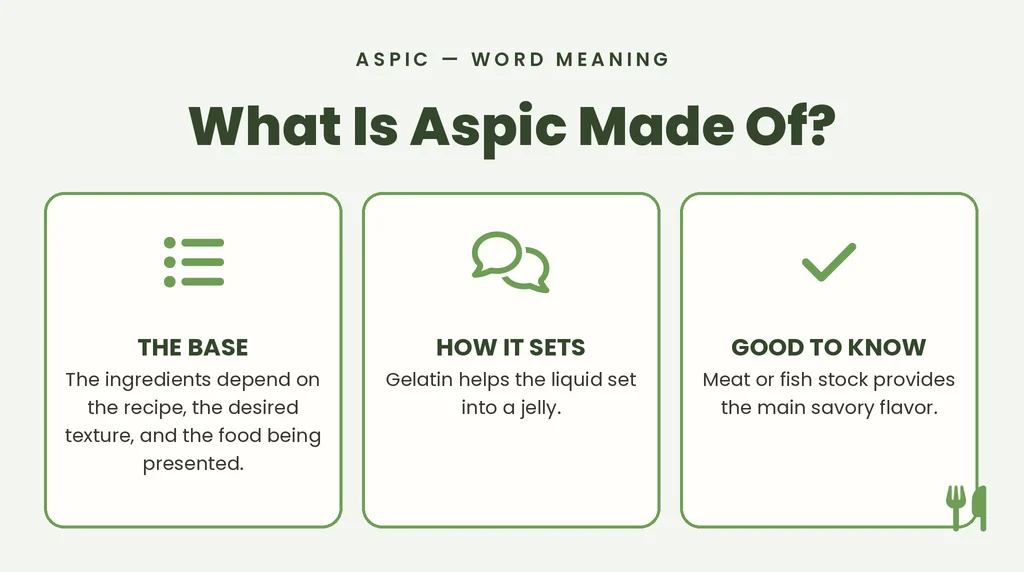
The ingredients depend on the recipe, the desired texture, and the food being presented. Traditional aspic can obtain its setting power from collagen released by slowly cooked bones, skin, and connective tissue. Modern recipes often use powdered or sheet gelatin to make the result more predictable.
Here are the main ingredients commonly used.
| Ingredient | Purpose |
|---|---|
| Meat or fish stock | Provides the main savory flavor |
| Gelatin | Helps the liquid set into a jelly |
| Meat or poultry | Adds substance and protein |
| Fish or seafood | Creates a cold seafood dish |
| Vegetables | Add color, texture, and freshness |
| Herbs and spices | Improve flavor and aroma |
| Salt and other seasonings | Balance the overall taste |
Some recipes use clarified stock to achieve a clear, polished appearance. Others, including tomato aspic, produce a more opaque jelly because of their ingredients.
One important detail is that not every aspic recipe requires separately added gelatin. A stock rich in collagen may set naturally after cooling. However, the result depends on the ingredients, cooking method, and concentration of the stock.
How Does Aspic Work?
The science behind aspic is easier to understand than its appearance might suggest.
Collagen is a structural protein found in animal connective tissue. During prolonged cooking, some collagen breaks down into gelatin. When a suitable gelatin-rich liquid cools, the gelatin forms a network that traps water and gives the mixture its jelly-like texture.
Commercial gelatin can achieve a similar result without requiring a cook to prepare a collagen-rich stock from scratch.
The basic process involves four stages:
- Prepare the stock: Cook meat, fish, or other suitable ingredients to develop flavor.
- Strain and season: Remove unwanted solids and adjust the flavor. Clarify the stock if a transparent finish is desired.
- Add gelatin if needed: Dissolve the appropriate amount according to the recipe and product instructions.
- Chill until set: Pour the liquid into a mold or over prepared ingredients, then refrigerate until firm.
The final texture can range from soft and delicate to firm enough for clean slices. The amount and strength of gelatin, along with the concentration of the liquid, determine how well the aspic holds its shape.
A useful practical point is that too little gelatin can leave the dish runny, while too much may create an unpleasantly rubbery texture. Following a tested recipe is the best way to achieve a consistent result.
What Does Aspic Look Like and Taste Like?
Aspic is often transparent or translucent, although its color changes according to the stock and seasonings used. A well-clarified meat stock may produce a clear amber jelly, while fish stock can create a paler result.
Tomato aspic is different. It typically has a red or orange appearance and a more pronounced tomato flavor.
The texture is usually cool, moist, and gelatinous. It may wobble slightly when moved, especially when served as a molded dish. Its taste comes primarily from the stock and seasonings rather than from the gelatin itself.
A chicken aspic might taste savory and mildly herbal. A seafood version may have a delicate fish flavor, while tomato aspic can taste tangy and refreshing.
Aspic is normally served cold, which helps it maintain its shape. It is not generally intended to taste like sweet dessert jelly.
Common Examples of Aspic
Aspic appears in several forms. The ingredients and presentation can vary considerably, even though the same basic idea connects them.
1. Chicken Aspic
Chicken aspic combines cooked chicken with a seasoned stock that sets into jelly. The chicken may be arranged in a mold, covered with the liquid, and chilled.
Thin slices can be served as a cold appetizer, often with salad leaves, mustard, or another suitable accompaniment.
2. Fish Aspic
Fish aspic uses fish stock or another suitable savory gelatin mixture to surround cooked fish. Shrimp and other seafood can also be incorporated.
A carefully prepared version can look elegant because the seafood remains visible through the jelly. It is often associated with traditional cold buffets.
3. Tomato Aspic
Tomato aspic is made using tomato juice or tomato-based liquid with a setting agent. Seasonings may include salt, pepper, herbs, and other savory additions.
It can be molded and served with salad or used as part of a cold appetizer. Its color and flavor make it noticeably different from clear meat-stock aspic.
4. Vegetable Aspic
Vegetable aspic contains ingredients such as carrots, peas, green beans, or other cooked vegetables suspended in a savory jelly.
The vegetables are usually arranged to create an attractive pattern. The result can be sliced and served cold, making it suitable for a traditional buffet or formal meal.
5. Eggs in Aspic
Hard-boiled eggs can be placed in a mold with seasoned stock and chilled until the mixture sets. Additional ingredients, such as herbs or vegetables, may be added for flavor and decoration.
The finished dish can be sliced to reveal the egg inside the jelly.
Why Is Aspic Used in Cooking?
Aspic serves several purposes beyond creating an unusual appearance. Its usefulness comes from the way it combines flavor, structure, and presentation.
It holds ingredients together. A set jelly can keep small pieces of meat, seafood, or vegetables in a stable arrangement, making the dish easier to slice and serve.
It adds flavor. Since aspic is made with seasoned stock, it contributes savory notes to the ingredients inside it. It is not simply a decorative coating.
It improves presentation. Clear aspic allows the ingredients to remain visible. Chefs can arrange colorful vegetables, herbs, or seafood in patterns that become apparent when the jelly sets.
It creates a moist coating. A thin layer of aspic can cover certain cold preparations, helping them retain a glossy appearance and adding a layer of savory flavor.
It makes use of stock. Traditional aspic is one example of how cooks can turn flavorful stock into a different preparation instead of serving it as soup.
Aspic is less common in everyday home cooking today, but the technique remains useful in traditional cuisine, professional kitchens, and dishes that call for a molded cold presentation.
Aspic vs. Gelatin: What Is the Difference?
Aspic and gelatin are related terms, but they do not mean the same thing.
Gelatin is a setting ingredient derived from collagen. Aspic is a savory preparation that uses gelatin or naturally gelatin-rich stock to create a jelly.
| Feature | Aspic | Gelatin |
|---|---|---|
| Meaning | A savory jelly or a dish made with it | A gelling substance |
| Main purpose | Creates a savory coating or molded dish | Thickens or sets liquids |
| Typical flavor | Savory, based on stock and seasoning | Usually neutral |
| Common uses | Cold meats, seafood, molded appetizers | Desserts, jellies, mousses, and savory dishes |
| Served as a finished dish | Yes | Usually an ingredient in another preparation |
For example, a cook might dissolve gelatin into seasoned chicken stock to make an aspic. The gelatin helps the liquid set, while the stock supplies the savory flavor.
The distinction matters because a dessert made with sweetened fruit juice and gelatin is not normally called aspic. The culinary term generally refers to a savory preparation, although some historical and regional variations exist.
Aspic vs. Terrine: Are They the Same?
Aspic and terrine are sometimes confused because both can be served cold and presented in a mold. However, they describe different aspects of a dish.
A terrine is a preparation traditionally cooked or assembled in a loaf-shaped dish, often containing meat, fish, vegetables, or other ingredients. It may be sliced for serving.
Aspic refers to the savory jelly itself or to a dish in which ingredients are enclosed in that jelly.
A terrine may be coated with aspic, but it does not have to be. Similarly, an aspic dish can contain ingredients arranged in a mold without being a terrine.
Think of a terrine as a style of preparation and aspic as a type of savory jelly. The two can work together, but they are not interchangeable terms.
What Does “In Aspic” Mean?
The phrase “in aspic” has a direct culinary meaning and a figurative meaning.
In food, it describes an ingredient or dish surrounded by savory jelly. For example:
The restaurant served slices of ham in aspic with a side of fresh greens.
This sentence means that the ham was presented with a savory jelly coating or surrounding it.
In figurative language, the expression “preserved in aspic” means kept unchanged, as if frozen in time. It is often used when discussing traditions, institutions, ideas, or places that have not adapted to changing circumstances.
For example:
The old rules remained preserved in aspic, even as the workplace changed.
The sentence suggests that the rules stayed fixed while everything around them developed.
This figurative use comes from the physical image of food held in a jelly that keeps its arrangement intact. It is a useful expression in essays, journalism, and everyday conversation.
Aspic Word Origin and History
The culinary word aspic entered English through French. Its recorded history in English dates to the late eighteenth century, although the precise explanation for the name is uncertain.
One proposed connection links the word to the asp, a type of venomous snake, possibly because of the jelly’s appearance or coldness. The exact origin of the culinary sense is not completely settled, so this explanation should be treated as a theory rather than a proven fact.
Traditional cooks learned to produce gelatin-rich liquids by simmering collagen-containing animal parts. Once cooled, these stocks could become firm enough to surround or hold other ingredients.
Before modern refrigeration became widely available, cooks also relied on seasonal temperatures, cool storage spaces, and ice to help prepare and preserve cold foods. Aspic became associated with elaborate cold dishes and formal dining, particularly in European culinary traditions.
The development of commercial gelatin made the process more convenient and predictable. Even so, aspic remains an example of a cooking technique built around a simple principle: transform a flavorful liquid into a structure that can hold other foods.
How to Use Aspic in a Sentence

Seeing the word in context makes its meaning easier to remember.
- Food description: The chef served sliced chicken in aspic as a cold appetizer.
- Traditional cooking: The cookbook included a recipe for fish aspic with herbs.
- Restaurant menu: The vegetable aspic was arranged in a decorative mold.
- Culinary explanation: Gelatin helped the seasoned stock set into aspic.
- Figurative expression: The organization seemed preserved in aspic, unable to adapt to new ideas.
These examples show how the word can describe a particular food preparation or appear in a metaphor about something remaining unchanged.
Is Aspic Still Used Today?
Yes. Aspic is less familiar to many modern diners than it was to earlier generations, but it has not disappeared from cooking.
It can still appear in traditional European recipes, formal cold dishes, restaurant presentations, and culinary training. Some chefs use it to create a glossy finish or to hold carefully arranged ingredients in place.
The technique also has practical value for cooks interested in stock preparation and food texture. Understanding aspic helps explain why some stocks set when refrigerated and how gelatin can be used to create a stable savory preparation.
For home cooks, the most important consideration is that aspic is a refrigerated food, not a shelf-stable preservation method. It should be prepared with proper food handling, kept refrigerated, and served within safe storage limits. Setting cooked meat or seafood in gelatin does not make it safe to store at room temperature.
Frequently Asked Questions
1. What is the simple meaning of aspic?
Aspic is a savory jelly made from meat or fish stock, usually with gelatin. It is used to coat or hold ingredients such as meat, seafood, vegetables, or eggs in a cold dish.
2. Is aspic the same as jelly?
Not exactly. The word jelly can refer to sweet fruit preparations or other gelled foods. Aspic specifically refers to a savory jelly or a dish made with it.
3. What is aspic made of?
Aspic is commonly made from meat or fish stock, seasonings, and gelatin when needed. It may also contain chicken, ham, seafood, vegetables, or eggs.
4. Does aspic taste sweet?
Traditional aspic is savory rather than sweet. Its flavor usually comes from the stock, herbs, spices, and other ingredients used in the recipe.
5. Is aspic healthy?
Its nutritional value depends on the ingredients, portion size, sodium content, and preparation method. Aspic made with lean meat and a moderately seasoned stock can fit into a varied diet, but some recipes may contain substantial salt or rich ingredients.
6. Why does aspic become solid?
Gelatin forms a network as it cools, trapping liquid and creating a jelly-like texture. A stock rich in natural gelatin can also set without additional gelatin.
7. What is tomato aspic?
Tomato aspic is a savory jelly prepared with tomato juice or a tomato-based mixture and a setting agent. It is often molded and served cold with salads or other accompaniments.
8. What does “preserved in aspic” mean?
Literally, it describes food enclosed in savory jelly. Figuratively, it means something has been kept unchanged or frozen in time instead of being allowed to develop.
9. Is aspic the same as a terrine?
No. A terrine is a type of molded preparation, often made with meat, fish, or vegetables. Aspic is a savory jelly that can coat or surround a terrine, but the two are not the same thing.
10. How do you pronounce aspic?
Aspic is commonly pronounced AS-pik, with the stress on the first syllable.
Final Thoughts
The meaning of aspic goes beyond a simple food definition. It describes a traditional savory jelly that can preserve the arrangement of ingredients, add flavor, and create a distinctive cold presentation. Made from gelatin-rich stock or stock combined with added gelatin, aspic can contain meat, seafood, vegetables, or eggs.
Although it may look unfamiliar to modern diners, the technique reflects an enduring part of culinary history: using simple ingredients and careful preparation to create something practical and visually appealing. Remember the key distinction: gelatin is the setting ingredient, while aspic is the savory preparation made with it.