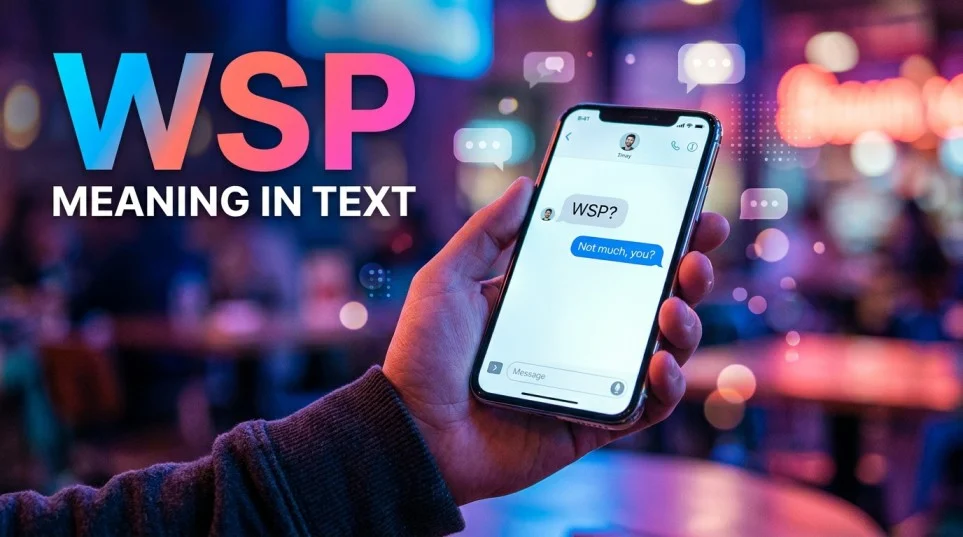
You open your phone and see a message that simply says “WSP?” Maybe a friend sent it on Snapchat, someone you recently met messaged you on Instagram, or a person you’ve been talking to decided to start a conversation. The short message looks simple, but what exactly does it mean?
WSP means “What’s up?” in text messages. It’s a casual greeting people use to say hello, ask how someone is doing, or find out what’s happening. Instead of typing the complete phrase, they use three letters to make the conversation quicker and more relaxed.
You’ll commonly see WSP in private messages, social media chats, and everyday texting. Its meaning can shift slightly depending on the situation. Sometimes it’s just another way to say hey. Other times, someone genuinely wants to know what you’re doing or whether you’re available to talk.
What Does WSP Mean in Text?
WSP stands for “What’s up?” It’s an informal texting abbreviation that people use to greet someone or ask what’s happening in their life.
Think of it as a shorter version of saying, “Hey, what’s going on?” Rather than typing the entire question, someone can simply send WSP and let the conversation develop naturally.
For example:
- Friend: WSP?
- You: Not much. Just watching a movie. You?
In this exchange, the sender isn’t necessarily asking about something important. They’re opening the door to a casual conversation.
WSP can serve several purposes depending on the situation:
- Greeting: A quick way to say hello.
- Checking in: Asking how someone is doing.
- Starting a conversation: Finding a reason to message someone.
- Asking about activities: Checking what another person is doing.
- Showing interest: Making contact without sending a long message.
The phrase works because it’s flexible. You can send it to a close friend, a classmate, or someone you’ve recently started talking to.
What Is the Full Form of WSP?
The full form of WSP is What’s up?
Here’s how the abbreviation works:
| Letter | Word |
|---|---|
| W | What’s |
| S | Up’s? No. The S represents the contracted word ending in “What’s” |
| P | Part of the shortened texting form |
More accurately, WSP is a conventional shortened spelling of the spoken phrase “What’s up?” It isn’t a strict letter-by-letter acronym in the usual sense. People recognize the whole abbreviation as a familiar greeting rather than decoding every letter individually.
You’ll also see people write it as:
- WSP?
- wsp?
- Wsp bro?
- Hey wsp
- WSP with you?
All these versions generally communicate the same basic idea.
What Does “What’s Up?” Actually Mean?
The phrase “What’s up?” has more than one conversational meaning. That’s why WSP doesn’t always require the same response.
It can mean hello.
When someone sends WSP after a few days without talking, they might simply want to reconnect.
Example:
Alex: WSP?
Jordan: Hey! Not much. How’ve you been?
It can ask what you’re doing.
If someone sends WSP in the evening, they might be checking whether you’re free or making plans.
Example:
Sam: WSP tonight?
Chris: Nothing planned yet. Why?
It can ask how you’re doing.
Sometimes WSP is a relaxed way to check on someone’s mood or general situation.
Example:
Mia: Hey, wsp?
Emma: Pretty good! Just finished work.
The surrounding conversation helps you understand which meaning fits best.
Is WSP an Acronym or Text Abbreviation?
WSP is commonly described as a texting abbreviation or initialism. However, its written form doesn’t follow the exact first-letter pattern of “What’s up?”
People use it as a compact version of the familiar phrase. They don’t usually pronounce it as three separate letters during conversation.
It’s part of a broader texting habit where people shorten common expressions to save time and keep messages informal.
Other examples include:
- WYD: What are you doing?
- WSG: What’s good?
- SUP: What’s up?
- HRU: How are you?
- HMU: Hit me up.
These expressions make digital conversations quicker, especially when people exchange several short messages throughout the day.
How Is WSP Used in Text Messages?
WSP isn’t limited to one particular type of conversation. People use it in several everyday situations, and understanding those situations helps you interpret the sender’s intention.
As a Casual Greeting
One of the most common uses of WSP is simply saying hello.
Imagine you’re scrolling through your messages when a friend sends “WSP bro?” They’re probably not expecting a detailed explanation of your day. They just want to start talking.
It’s similar to these greetings:
- Hey!
- What’s going on?
- How’s everything?
- What’s new?
- How are you doing?
Example conversation:
Ryan: WSP bro?
Daniel: Nothing much. Just chilling.
Ryan: Same here. You free later?
Notice how the first message creates an opening. The conversation then moves toward another topic.
To Ask What Someone Is Doing
WSP can also function as a casual question about someone’s current activities.
This meaning becomes clearer when the sender mentions a particular time or situation.
For example:
Jake: WSP?
Noah: Just playing basketball.
Jake: Nice. At the gym or outside?
Here, Jake wants to know what Noah is doing. The conversation moves beyond a simple greeting.
You might receive similar messages such as:
- WSP right now?
- WSP today?
- WSP this weekend?
- WSP with you?
- WSP later?
The wording around WSP provides additional clues about the actual question.
To Check In With Someone
Sometimes people send WSP because they want to know how you’ve been.
This is especially common when someone hasn’t spoken to you for a while. They may not know how to restart the conversation, so they choose a short and familiar greeting.
For example:
Olivia: Hey, wsp? Haven’t heard from you lately.
Sophie: I’ve been good! Just busy with college.
In this situation, WSP introduces a friendly check-in. The second sentence makes the sender’s interest clearer.
To Start a Conversation
Starting a conversation can feel awkward, especially when you don’t have a specific topic in mind.
WSP offers an easy opening. It doesn’t require a detailed explanation or an interesting story. The other person can answer however they like.
For instance:
Person A: WSP?
Person B: Not much. What’s up?
Person A: Just wanted to talk. How was your day?
This type of exchange is common between friends, classmates, and people getting to know each other.
However, sending WSP repeatedly without adding anything meaningful can make a conversation feel repetitive. A more engaging follow-up usually helps.
WSP Meaning on Snapchat, Instagram, TikTok, and WhatsApp
WSP generally keeps the same meaning across social media platforms: “What’s up?” However, the way people use it can depend on the platform and their relationship with the person receiving the message.
You might see it in a private message, a group conversation, or a quick reply to someone’s story. The abbreviation doesn’t have a special meaning exclusive to one social network.
WSP Meaning on Snapchat
WSP on Snapchat means “What’s up?”
Snapchat users often send short messages because the platform encourages quick, casual interactions. Someone might send WSP after adding you, replying to your story, or noticing that you’re active.
For example:
Person A: WSP?
Person B: Nothing much. Just chilling.
Person A: You doing anything later?
Here are some common Snapchat situations where you might see WSP:
- After accepting a friend request: Someone wants to introduce themselves.
- After viewing a story: A person uses WSP to start a private conversation.
- Between friends: Someone checks what you’re doing.
- During a streak conversation: A friend adds WSP to a quick message to make the exchange more conversational.
A message saying WSP doesn’t automatically mean someone wants to flirt. It may simply be an easy way to get your attention.
WSP Meaning on Instagram
On Instagram, WSP usually appears in direct messages (DMs). People use it to start conversations with friends, followers, acquaintances, or someone they recently connected with.
For example:
Person A: Hey, wsp?
Person B: Just scrolling through Instagram lol. You?
Person A: Same. Saw your new post!
Instagram users may also send WSP after reacting to a story or responding to a reel.
Some common examples include:
- WSP, how’s your day going?
- WSP with you?
- Hey, haven’t talked in a while!
- WSP, are you free?
The message is usually informal. If someone sends it without additional details, a short and friendly response is perfectly appropriate.
WSP Meaning on TikTok
TikTok users may use WSP in direct messages when they want to start a conversation without writing a long introduction.
For example:
Person A: WSP
Person B: Not much. Just watching videos.
Person A: Same! Did you see that new trend?
You might encounter WSP when:
- Someone wants to talk after sharing a video.
- A mutual follower starts a conversation.
- Friends discuss a trending video.
- Someone checks whether you’re available.
TikTok doesn’t give WSP a separate platform-specific definition. Its usual texting meaning remains the same.
WSP Meaning on WhatsApp and Other Messaging Apps
On WhatsApp, WSP is another way to say “What’s up?” People use it in individual chats and group conversations.
The same applies to other messaging services:
| Platform | How People Use WSP |
|---|---|
| Greeting friends and checking in | |
| iMessage | Starting casual conversations |
| Facebook Messenger | Opening a private chat |
| Discord | Greeting friends or starting a conversation |
| SMS text messages | Asking what’s happening |
One small distinction matters: WSP can sometimes refer to WhatsApp itself in certain conversations. For example, someone might use it as shorthand when discussing messaging apps.
However, if a friend sends you “WSP?” as a standalone message, “What’s up?” is the more likely interpretation.
What Does WSP Mean From a Guy or a Girl?
Receiving WSP from someone you’re interested in can make you wonder about their intentions. Are they just being friendly, or are they trying to start something more?
The abbreviation itself doesn’t reveal someone’s feelings. You need to consider the relationship, timing, and messages that follow.
WSP Meaning From a Guy
When a guy sends WSP, he’s usually opening a casual conversation or checking what you’re doing.
His intention might depend on how well you know each other.
- If he’s your friend: He may simply want to talk, share something, or make plans.
Him: WSP bro?
You: Just studying. What’s up?
Him: Nothing. Thought I’d check in.
- If he’s someone you recently met: He might be trying to become more familiar with you.
Him: Hey, wsp?
You: Not much. How about you?
Him: Just got home. How was your day?
- If he’s someone you’re dating or interested in: WSP could be his way of getting your attention and creating an opportunity to talk.
However, don’t assume romantic interest from three letters. His follow-up messages will tell you much more.
WSP Meaning From a Girl
When a girl texts WSP, she might be greeting you, checking in, or looking for an opportunity to chat.
The message can have different meanings depending on your existing connection.
For example:
Between friends:
Her: WSP girl?
You: Nothing much. Just watching Netflix.
From someone you recently met:
Her: Hey, wsp?
You: Just relaxing. What’s going on?
Her: Nothing much. Thought I’d say hi.
From someone who wants to make plans:
Her: WSP tonight?
You: I’m free. Why?
Her: Wanna hang out?
In these examples, WSP opens the conversation. The remaining messages explain what the sender actually wants.
Does WSP Mean Someone Likes You?
Not necessarily. Someone can send WSP because they’re bored, friendly, curious, or interested in having a conversation.
Still, a few signs may suggest romantic interest when they appear alongside the greeting.
Look for these behaviors:
- They keep the conversation going: They ask follow-up questions instead of ending the chat after your reply.
- They remember personal details: They bring up something you mentioned previously.
- They show genuine curiosity: They ask about your interests, plans, and experiences.
- They initiate conversations regularly: They make an effort to contact you rather than always waiting for you.
- They suggest spending time together: They move beyond texting and express interest in meeting.
No single sign proves attraction. Look at the overall pattern rather than interpreting one short message.
Is WSP Flirty, Friendly, or Rude?
WSP is generally a neutral and informal expression. It can sound friendly, playful, or slightly flirtatious depending on the conversation.
The abbreviation itself doesn’t carry a fixed emotional meaning.
Is WSP a Flirty Text?
WSP can be part of a flirty conversation, especially when someone uses it to get closer to a person they like.
For example:
Person A: WSP?
Person B: Nothing much. Thinking about you though.
Person A: Oh really? Should I feel special?
Here, the flirtation comes from the playful replies, not the abbreviation itself.
Other situations where WSP might lead into flirting include:
- Someone sends it late in the evening and continues chatting.
- The conversation includes playful teasing.
- The sender compliments you after your response.
- They ask whether you’re free to meet.
- They regularly look for opportunities to talk.
Remember that a friendly greeting doesn’t automatically become romantic just because someone sends it first.
Is WSP Just a Friendly Greeting?
Yes. In most everyday messages, WSP is simply a relaxed greeting.
Friends use it when they have nothing specific to discuss but still want to connect.
For example:
Alex: WSP?
Chris: Just finished dinner. You?
Alex: Watching a game.
There’s no hidden message here. It’s an ordinary exchange between two people.
Is WSP Rude or Disrespectful?
Generally, no. WSP isn’t considered an offensive expression.
However, some people may find a one-word greeting a little lazy or impersonal, especially when they don’t know the sender well.
Consider these differences:
| Message | Possible Impression |
|---|---|
| WSP? | Casual and direct |
| Hey, WSP? | Friendly and approachable |
| Yo wsp bro? | Very informal |
| WSP, how have you been? | More thoughtful |
| WSP??? | Potentially impatient or demanding |
The number of question marks, additional words, and existing relationship can influence how a message feels.
If someone sends WSP without any additional context, there’s usually no reason to interpret it negatively.
How to Reply to WSP in Text?
The best response depends on your mood, relationship with the sender, and whether you want to continue the conversation.
You don’t need a complicated answer. A simple update followed by a question is often enough to keep things moving.
Casual Replies to WSP
If a friend or acquaintance sends WSP, keep your response relaxed.
Here are some natural replies:
| Reply | When to Use It |
|---|---|
| Not much, you? | Everyday conversations |
| Nothing much. What’s up? | When you want to know why they messaged |
| Just chilling. You? | When you’re relaxing |
| Hey! What’s going on? | When you want to sound friendly |
| Same old, same old. | When nothing interesting is happening |
| Just got home. How about you? | When you’ve finished something |
Example:
Friend: WSP?
You: Not much, just relaxing. You?
Friend: Same. Wanna play something?
This response answers the question and gives the other person room to continue.
Funny Replies to WSP
A little humor can make an ordinary conversation more entertaining. If you know the sender well, try something playful.
Here are a few ideas:
- Just fighting my responsibilities. You?
- Trying to become a millionaire before Friday.
- Same chaos, different day.
- Waiting for my life to load properly.
- Currently negotiating with my bed.
- Surviving on snacks and good intentions.
- Nothing exciting unless you count doing absolutely nothing.
Example:
Friend: WSP bro?
You: Just waiting for my motivation to arrive.
Friend: Let me know when you find it!
Funny replies work best when they match the other person’s sense of humor. Avoid overly sarcastic responses with someone you barely know.
Friendly Replies to WSP
If you want to sound warm and approachable, add a little more detail to your response.
Try these:
- Hey! How have you been?
- Just relaxing. How’s your day going?
- Doing pretty well. What about you?
- Not much. It’s been a busy week!
- Good to hear from you. What’s new?
For example:
Person A: Hey, wsp?
Person B: Pretty good! Just finished work. How are things with you?
This type of reply feels more personal than simply saying “NM.”
Flirty Replies to WSP
If you’re interested in the person and want to make the conversation playful, you can respond with a little flirtation.
Some options include:
- Nothing much. What about you, handsome?
- My day just got better. What’s up?
- Waiting for someone interesting to text me.
- Not much. Was hoping you’d message.
- Just relaxing. What are you up to tonight?
- Better now that you’re here!
Example:
Him: WSP?
You: Nothing much. Was hoping you’d text.
Him: Well, here I am!
These replies communicate interest without making the exchange too serious.
Replies When You’re Busy
You don’t have to stop everything just because someone messages you.
A short response can acknowledge their message while making your availability clear.
Try these:
- A little busy right now. What’s up?
- Working at the moment. Talk later?
- I’m out right now. Everything okay?
- Can I text you in a bit?
- Just finishing something. I’ll message you soon.
- Busy with classes, but what’s going on?
Example:
Friend: WSP?
You: At work right now. Everything okay?
Friend: Yeah, just wanted to ask something.
This approach is polite and practical. It also helps the sender explain why they contacted you.
Replies When You Don’t Know the Person Well
If someone unfamiliar sends WSP, you can respond politely without sharing too much personal information.
For example:
- Hey! What’s up?
- Hello, how can I help?
- Not much. Do we know each other?
- Hey, what’s going on?
- Hi! Have we talked before?
If the message makes you uncomfortable, you don’t have to respond. You’re free to ignore or block unwanted contacts.
What If You Don’t Want to Continue the Conversation?
Sometimes you receive WSP when you’re not interested in chatting. A polite but brief response can communicate that you’re unavailable.
Examples:
- Not much. Hope you’re doing well!
- Just busy with a few things.
- Nothing special. Have a good one!
- I’m taking some time offline today.
- A little occupied right now.
If someone keeps messaging despite your lack of interest, you can set a clearer boundary rather than continuing to reply out of politeness.
WSP vs. WYD vs. WSG vs. SUP: What’s the Difference?
WSP, WYD, WSG, and SUP may look similar because people use them in casual conversations. However, they don’t always communicate the same thing.
Understanding their differences helps you choose the right expression and respond appropriately.
| Abbreviation | Full Form | Main Purpose | Example |
|---|---|---|---|
| WSP | What’s up? | Greeting or general check-in | WSP bro? |
| WYD | What are you doing? | Asking about current activities | WYD tonight? |
| WSG | What’s good? | Casual greeting or asking what’s happening | WSG everyone? |
| SUP | What’s up? | Short informal greeting | Sup, dude? |
| HRU | How are you? | Asking about someone’s well-being | HRU today? |
| HYD | How are you doing? | Checking how someone feels | HYD lately? |
| WYA | Where you at? | Asking about someone’s location | WYA right now? |
Let’s look at the most common comparisons more closely.
WSP vs. WYD
The difference between WSP and WYD comes down to what the sender wants to know.
WSP means “What’s up?” It’s a broad greeting that can start almost any casual conversation.
WYD means “What are you doing?” It asks more directly about someone’s current activity.
Compare these examples:
WSP:
Person A: WSP?
Person B: Not much. Just relaxing.
WYD:
Person A: WYD?
Person B: Watching a movie.
Both expressions can start conversations, but WYD focuses more clearly on what you’re doing at that moment.
WSP vs. WSG
WSP stands for “What’s up?” while WSG stands for “What’s good?”
Both expressions work as casual greetings. People often use them when messaging friends or starting conversations online.
For example:
Person A: WSP bro?
Person B: Nothing much. You?
Compare that with:
Person A: WSG?
Person B: All good! What’s happening?
The difference is subtle. WSP asks what’s happening, while WSG can sound more like asking how things are going.
In everyday texting, their meanings sometimes overlap.
WSP vs. SUP
WSP and SUP are closely related because both communicate “What’s up?”
The main difference is their written form.
- WSP: A shortened texting version.
- SUP: A shortened spelling of the spoken greeting “What’s up?”
Examples:
WSP bro? What’s up, bro?
Sup bro? What’s up, bro?
Both are informal. You can use either one in casual conversations with friends.
WSP vs. HRU
HRU means “How are you?” It focuses more directly on someone’s well-being.
WSP is broader. It can mean hello, what’s happening, or what are you doing?
For example:
Person A: WSP?
Person B: Nothing much. Just working.
Compared with:
Person A: HRU?
Person B: I’m doing great. Thanks for asking!
The second exchange focuses more on how someone feels rather than what they’re currently doing.
How to Use WSP Correctly in a Text?
WSP is easy to use, but choosing the right situation makes your message feel more natural.
Because it’s informal slang, it works best when you already have a relaxed communication style with the other person.
When Should You Use WSP?
You can use WSP in several everyday situations:
- When greeting friends: Send WSP when you want to say hello without starting with a long message.
- When checking in: Use it to see how someone is doing after a few days without talking.
- When starting a DM: It can help you open a conversation with someone you already know.
- When making casual plans: Add a time reference to make your question more specific.
- When messaging group chats: Use WSP to greet several friends at once.
Examples:
- WSP everyone?
- Hey, wsp today?
- WSP bro, you free?
- WSP tonight? Want to hang out?
- WSP, haven’t talked in ages!
When Should You Avoid Using WSP?
Although WSP is widely understood in casual texting, it isn’t suitable for every situation.
Avoid using it in:
- Professional emails: Write “Hello” or “How are you?” instead.
- Workplace communication: Use clear and respectful language when messaging managers or clients.
- Academic communication: Avoid texting abbreviations in assignments and formal messages.
- Official requests: Write complete questions so the recipient understands exactly what you need.
- First-time professional introductions: A polite greeting creates a better impression.
For example, compare these messages:
Too casual for work
WSP? Need that report.
More appropriate
Hello, could you please share the report when you have a moment?
The second message communicates the request clearly and maintains a professional tone.
Should You Write WSP in Capital Letters or Lowercase?
You can write WSP in uppercase, lowercase, or mixed case. The meaning generally stays the same.
| Version | Example | Impression |
|---|---|---|
| WSP | WSP bro? | Direct and casual |
| wsp | wsp? | Relaxed and informal |
| Wsp | Wsp, how are you? | Neutral and conversational |
| WSP? | WSP? | A straightforward question |
| Hey, wsp? | Hey, wsp? | Friendly and approachable |
Capitalization usually reflects personal typing habits rather than a different definition.
Punctuation can also influence the tone. For example, “WSP?” looks like a direct question, while “Hey, wsp!” may feel more enthusiastic.
Is WSP Still Popular in Modern Texting?
WSP remains a recognizable texting abbreviation because it offers a quick way to start a conversation.
People don’t always want to type complete sentences when sending casual messages. A short greeting can do the job, especially when the sender already knows the recipient.
The abbreviation has roots in early online and texting communication. Dictionary.com documents its use as an abbreviation for “What’s up?” and traces online usage back to at least the early 2000s. dictionary.com
Today, you may encounter WSP in:
- Private messages between friends.
- Snapchat conversations.
- Instagram direct messages.
- TikTok chats.
- WhatsApp group messages.
- Gaming communities and online chats.
However, not everyone uses texting slang in the same way. Some people prefer complete sentences, while others naturally shorten familiar expressions.
The important point is that WSP isn’t tied to one age group or social media platform. Its meaning is generally understood in informal digital conversations.
Other Common Texting Abbreviations Related to WSP
If you’re learning modern texting slang, you’ll probably encounter several abbreviations that appear in similar conversations.
Some are greetings, while others help people respond, share information, or keep a conversation moving.
Here’s a quick reference table:
| Slang | Full Form | How It’s Used |
|---|---|---|
| WYD | What are you doing? | Asking about someone’s activity |
| WSG | What’s good? | Starting a casual conversation |
| SUP | What’s up? | Greeting someone |
| HRU | How are you? | Asking how someone feels |
| HYD | How are you doing? | Checking in |
| WYA | Where you at? | Asking someone’s location |
| HBU | How about you? | Returning a question |
| NM | Not much | Saying nothing special is happening |
| IDK | I don’t know | Expressing uncertainty |
| HMU | Hit me up | Asking someone to contact you |
| TBH | To be honest | Introducing an honest opinion |
| LOL | Laughing out loud | Showing amusement |
| BRB | Be right back | Saying you’ll return shortly |
| GM | Good morning | Greeting someone in the morning |
| GN | Good night | Saying goodbye before sleeping |
Which Abbreviations Are Most Similar to WSP?
If you’re looking for expressions that serve a similar purpose, these are especially useful:
- SUP: Almost identical in meaning to WSP.
- WSG: Another informal greeting.
- WYD: A more specific question about someone’s activity.
- HRU: Focuses on someone’s well-being.
- HBU: Helps continue a conversation after answering a question.
Learning these expressions makes everyday digital communication easier to understand.
Frequently Asked Questions
What does WSP mean in text?
WSP means “What’s up?” in text messages. It’s an informal abbreviation people use to greet someone, check in, or ask what’s happening. For example, if a friend sends “WSP?” you can reply, “Not much, you?”
What does WSP stand for in texting?
WSP stands for “What’s up?” It’s a shortened texting expression commonly used in private messages, group chats, and social media conversations. It helps people start conversations without typing a complete greeting.
What does WSP mean from a guy?
When a guy sends WSP, he’s usually asking what’s happening or trying to start a conversation. He might be checking what you’re doing, saying hello, or looking for an opportunity to talk. It doesn’t automatically mean he’s romantically interested.
What does WSP mean from a girl?
When a girl texts WSP, she is generally using it as a casual greeting or conversation starter. She might want to check in, ask what you’re doing, or simply start chatting. The surrounding conversation helps explain her intention.
Is WSP the same as WYD?
No. WSP means “What’s up?” while WYD means “What are you doing?” WSP is a broader greeting, whereas WYD specifically asks about someone’s current activity. Both are common in informal conversations.
Is WSP flirty?
WSP isn’t automatically flirty. It’s usually a friendly greeting. However, someone might use it to start a conversation with a person they like. Their follow-up messages and overall behavior provide better clues about romantic interest.
How do you respond to WSP?
You can respond with a simple message that matches the sender’s tone. Some natural replies include:
- Not much, you?
- Just chilling.
- Nothing new. What’s up?
- Pretty good! How about you?
- Just got home. What’s going on?
If you want to keep talking, add a question to your response.
What does WSP mean on Snapchat?
On Snapchat, WSP usually means “What’s up?” People send it in private chats to greet friends, check what someone is doing, or start a conversation after viewing a story. It doesn’t have a separate Snapchat-specific definition.
Can WSP mean something other than What’s Up?
Yes. Context can give WSP other meanings. For example, in some gaming communities, it can mean “whisper,” referring to a private in-game message. It can also refer to WhatsApp in certain conversations. However, “What’s up?” is the common interpretation in everyday texting. Slang.net+1
Is WSP appropriate for professional messages?
WSP is generally too informal for professional communication. In workplace emails or messages to clients, use complete greetings such as “Hello,” “Good morning,” or “How are you?” instead.
Conclusion
Understanding WSP meaning in text is simple once you know its most common definition. WSP stands for “What’s up?” and works as a casual greeting, conversation starter, or way to check what someone is doing.
You’ll commonly see it in Snapchat messages, Instagram DMs, TikTok chats, WhatsApp conversations, and regular text messages. The meaning usually stays the same across these platforms.
If someone sends you WSP, a simple response like “Not much, you?” is enough to keep the conversation moving. You can also use a funny, friendly, or flirty reply depending on your relationship with the sender.
Just remember that WSP doesn’t automatically indicate romantic interest or a hidden message. Context matters more than the three letters themselves.