Blue is more than a color. It can feel like the silence before sunrise, the weight of an unspoken goodbye, or the freedom of standing beside an endless ocean. Sometimes it brings peace. At other times, it carries sadness, loneliness, mystery, or a quiet sense of hope. Few colors can express so many different emotions through a single image.
That is what makes a metaphor for blue so useful in creative writing. Instead of simply describing something as blue, you can turn the color into a living image. The sky becomes a forgotten dream. The sea becomes a mirror of the soul. A blue room becomes a sanctuary for tired thoughts.
Writers use blue metaphors in poetry, novels, personal essays, song descriptions, and everyday storytelling to create atmosphere and emotional depth. In this guide, you will discover 20 original and expressive metaphors for blue, complete with meanings, alternative expressions, and examples you can adapt to your own writing.
Quick Metaphors for Blue
Here are 20 creative ways to describe blue through metaphor:
- Blue is a blanket of calm.
- Blue is the ocean’s memory.
- Blue is a window into infinity.
- Blue is a song without words.
- Blue is sadness dressed in silk.
- Blue is the sky’s quiet heartbeat.
- Blue is a frozen flame.
- Blue is a doorway to dreams.
- Blue is a river of peace.
- Blue is loneliness wearing a beautiful face.
- Blue is the whisper of distant mountains.
- Blue is a pocket of midnight.
- Blue is a mirror for the soul.
- Blue is a breath of fresh air.
- Blue is a letter from the horizon.
- Blue is a sleeping storm.
- Blue is a crown of winter.
- Blue is hope floating above the clouds.
- Blue is the velvet of the night.
- Blue is an unfinished thought.
These expressions can describe blue objects, landscapes, emotions, clothing, artwork, and imaginary worlds. Their meanings depend on the surrounding context.
1. Blue Is a Blanket of Calm

Meaning
This metaphor describes blue as a source of peace, comfort, and emotional stillness. It suggests the soothing feeling of a quiet sky or a calm sea.
Why It Works
A blanket creates a sense of warmth and protection. Combining that familiar image with blue makes the color feel comforting rather than cold.
This metaphor works particularly well in peaceful descriptions, reflective essays, and nature writing.
Alternative Expression
Blue is a soft refuge for a restless mind.
Examples in Writing
Formal Example: The pale blue walls became a blanket of calm in the otherwise busy office.
Casual Example: That blue room feels like a blanket of calm after a long day.
Creative Example: Blue settled over the garden like a blanket, wrapping every restless leaf in silence.
2. Blue Is the Ocean’s Memory

Meaning
This metaphor presents blue as a keeper of memories, secrets, and untold stories. It suggests that the ocean remembers everything that has passed through its waters.
Why It Works
The ocean feels ancient and mysterious. Giving it a memory adds personality to the color and creates a sense of history beneath the surface.
Use this metaphor in poetry, fantasy writing, or stories about nostalgia and lost connections.
Alternative Expression
Blue is an archive of forgotten tides.
Examples in Writing
Formal Example: The deep blue sea seemed to preserve the ocean’s memory of generations of sailors.
Casual Example: Looking at that blue water makes me think about all the stories it could tell.
Creative Example: The ocean held its blue like a memory it refused to surrender.
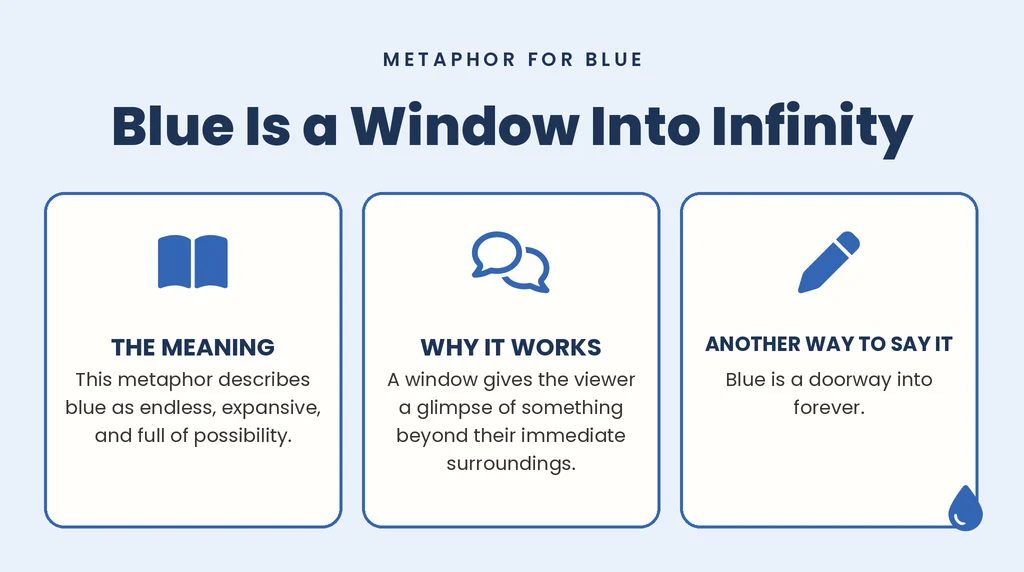
3. Blue Is a Window Into Infinity
Meaning
This metaphor describes blue as endless, expansive, and full of possibility. It works especially well when describing the open sky or a vast body of water.
Why It Works
A window gives the viewer a glimpse of something beyond their immediate surroundings. Blue becomes an invitation to imagine what lies beyond the visible world.
Alternative Expression
Blue is a doorway into forever.
Examples in Writing
Formal Example: The cloudless sky became a window into infinity, stretching beyond the limits of the landscape.
Casual Example: That endless blue sky makes the world feel so much bigger.
Creative Example: I looked into the blue and found a thousand horizons waiting beyond my reach.
4. Blue Is a Song Without Words
Meaning
This metaphor describes blue as a quiet form of emotional expression. It can communicate longing, peace, sadness, or wonder without needing language.
Why It Works
Music can express feelings that people struggle to explain. Connecting blue to a wordless song gives the color a subtle emotional voice.
It is particularly effective in poetry, descriptions of artwork, and reflective storytelling.
Alternative Expression
Blue is a melody woven from silence.
Examples in Writing
Formal Example: The artist’s use of blue created a song without words, expressing emotions that the portrait could not explain directly.
Casual Example: The whole painting feels like a song without words.
Creative Example: Blue hummed through the empty room, singing everything my lips had forgotten.
5. Blue Is Sadness Dressed in Silk
Meaning
This metaphor represents sadness as something beautiful, gentle, and quietly elegant.
Why It Works
Silk suggests softness and delicacy. Pairing it with sadness creates a contrast between emotional pain and outward beauty.
This expression suits melancholy poetry, emotional fiction, and descriptions of blue artwork.
Alternative Expression
Blue is a velvet curtain hiding a broken heart.
Examples in Writing
Formal Example: The portrait portrayed blue as sadness dressed in silk, combining delicate beauty with an unmistakable sense of loss.
Casual Example: That shade of blue feels like sadness dressed up in something beautiful.
Creative Example: She wore blue like silk over a heart that had forgotten how to heal.
6. Blue Is the Sky’s Quiet Heartbeat
Meaning
This metaphor presents blue as the steady, peaceful rhythm of nature.
Why It Works
A heartbeat represents life and continuity. Applying it to the sky makes an enormous, distant space feel alive and intimate.
It works well in nature writing, descriptive essays, and peaceful scenes.
Alternative Expression
Blue is the pulse of the open sky.
Examples in Writing
Formal Example: The pale morning sky seemed to carry the quiet heartbeat of a waking world.
Casual Example: That soft blue makes everything feel alive and peaceful.
Creative Example: Above the sleeping fields, blue beat gently like the heart of the morning.
7. Blue Is a Frozen Flame
Meaning
This metaphor describes blue as a color that combines coolness with intensity. It can suggest icy beauty, restrained passion, or a powerful emotion held beneath a calm surface.
Why It Works
Flames usually suggest heat, while frozen things suggest coldness. Bringing them together creates an intriguing contradiction.
This metaphor is useful for describing electric blue lights, intense blue eyes in fictional characters, or emotionally complex scenes.
Alternative Expression
Blue is fire trapped inside ice.
Examples in Writing
Formal Example: The electric blue glow resembled a frozen flame, bright enough to command attention yet strangely cold.
Casual Example: That neon blue looks like a frozen flame.
Creative Example: Blue burned without warmth, a frozen flame refusing to surrender its light.
8. Blue Is a Doorway to Dreams
Meaning
This metaphor presents blue as an entrance to imagination, possibility, and the mysterious world of dreams.
Why It Works
Doorways symbolize transitions. Blue often appears in twilight skies and dreamlike landscapes, making it a natural symbol of entering another world.
Alternative Expression
Blue is a passage into the imagination.
Examples in Writing
Formal Example: The deep blue backdrop served as a doorway to dreams in the artist’s surreal composition.
Casual Example: That dreamy blue color makes me feel like I’m somewhere magical.
Creative Example: I stepped into the blue and left the ordinary world sleeping behind me.
9. Blue Is a River of Peace
Meaning
This metaphor describes blue as a continuous flow of tranquility.
Why It Works
A gently flowing river suggests movement without urgency. Blue adds a sense of coolness and emotional balance.
Use this metaphor when describing calm water, peaceful landscapes, or moments of relief after a stressful experience.
Alternative Expression
Blue is a current of quietness.
Examples in Writing
Formal Example: The soft blue of the landscape formed a river of peace through the otherwise restless scene.
Casual Example: That view is a river of peace for my mind.
Creative Example: Blue flowed through the valley, carrying every anxious thought toward the sea.
10. Blue Is Loneliness Wearing a Beautiful Face
Meaning
This metaphor represents loneliness as an emotion that can appear beautiful or peaceful from the outside while hiding pain underneath.
Why It Works
Blue is often associated with sadness, but it can also be visually attractive and calming. This metaphor captures the difference between outward appearance and inner experience.
It is especially effective in character development, poetry, and reflective personal writing.
Alternative Expression
Blue is a beautiful silence with an empty heart.
Examples in Writing
Formal Example: The painting presented blue as loneliness wearing a beautiful face, concealing isolation beneath its elegant appearance.
Casual Example: Sometimes blue feels beautiful and lonely at the same time.
Creative Example: The room glowed blue, beautiful enough to admire and lonely enough to break a heart.
11. Blue Is the Whisper of Distant Mountains
Meaning
This metaphor describes the soft blue appearance of distant mountains and the quiet mystery they create.
Why It Works
Distant landscapes often appear blue because of atmospheric scattering. Turning that visual effect into a whisper gives the scene a sense of distance, softness, and secrecy.
Alternative Expression
Blue is a secret resting on the horizon.
Examples in Writing
Formal Example: The distant mountain range became a whisper of blue against the pale morning sky.
Casual Example: Those mountains look like a blue whisper in the distance.
Creative Example: Beyond the fields, blue mountains whispered stories the valley could never hear.
12. Blue Is a Pocket of Midnight
Meaning
This metaphor describes a deep, dark blue that carries mystery, stillness, or the quiet atmosphere of nighttime.
Why It Works
A pocket suggests a small space that holds something precious or hidden. Midnight adds darkness and secrecy.
It works particularly well for navy blue clothing, dark blue artwork, nighttime skies, and mysterious settings.
Alternative Expression
Blue is a fragment of the night sky.
Examples in Writing
Formal Example: The navy fabric held a pocket of midnight in its rich, dark folds.
Casual Example: That deep blue looks like a little piece of midnight.
Creative Example: She carried midnight in the blue of her coat, a secret stitched into every seam.
13. Blue Is a Mirror for the Soul
Meaning
This metaphor suggests that blue reflects a person’s inner emotions, thoughts, and state of mind.
Why It Works
Mirrors are associated with reflection and self-discovery. Blue can represent many emotions, so the metaphor allows the color to reflect different aspects of the human experience.
Alternative Expression
Blue is a reflection of the heart.
Examples in Writing
Formal Example: The artist used blue as a mirror for the soul, allowing the audience to interpret the work through their own experiences.
Casual Example: This shade of blue really reflects how I feel today.
Creative Example: I stared into the blue and watched my hidden feelings rise to the surface.
14. Blue Is a Breath of Fresh Air
Meaning
This metaphor represents blue as refreshing, uplifting, and emotionally liberating.
Why It Works
A breath of fresh air suggests relief after being surrounded by something stale, crowded, or exhausting. Blue can create a similar impression when used in open landscapes, interiors, and visual design.
Alternative Expression
Blue is a breeze for a tired mind.
Examples in Writing
Formal Example: The pale blue design offered a breath of fresh air after years of dark and crowded interiors.
Casual Example: This blue color is such a breath of fresh air.
Creative Example: Blue entered the room like a cool breeze through a window that had been closed for years.
15. Blue Is a Letter From the Horizon
Meaning
This metaphor describes blue as a message from distant places, new beginnings, or possibilities that have not yet arrived.
Why It Works
A letter carries information from someone or somewhere beyond immediate reach. The horizon represents distance and the unknown.
Together, they create an image of hope, travel, and anticipation.
Alternative Expression
Blue is a message from faraway places.
Examples in Writing
Formal Example: The brilliant blue horizon felt like a letter promising opportunities beyond the familiar landscape.
Casual Example: Looking at that blue horizon makes me want to travel somewhere new.
Creative Example: The horizon sent me a letter written in blue, and every wave carried another line.
16. Blue Is a Sleeping Storm
Meaning
This metaphor represents hidden power, restrained emotion, or tension waiting beneath a calm surface.
Why It Works
A sleeping storm appears quiet, but its potential energy creates suspense. Blue can suggest both peacefulness and the darker tones of approaching bad weather.
This metaphor is especially useful in dramatic fiction and descriptions of troubled characters.
Alternative Expression
Blue is thunder hiding beneath still water.
Examples in Writing
Formal Example: The dark blue sky resembled a sleeping storm, peaceful in appearance but heavy with tension.
Casual Example: That dark blue feels like a storm about to wake up.
Creative Example: Beneath the blue silence, the storm curled up and waited for its name to be called.
17. Blue Is a Crown of Winter
Meaning
This metaphor describes blue as a symbol of icy beauty, cold elegance, and winter’s quiet authority.
Why It Works
A crown suggests power and distinction. Winter adds associations with frost, stillness, and crystalline landscapes.
It is useful for describing icy blue eyes in fictional characters, frozen lakes, winter fashion, and seasonal poetry.
Alternative Expression
Blue is the kingdom of frost.
Examples in Writing
Formal Example: The frozen lake wore a crown of winter, its blue surface shining beneath the morning sun.
Casual Example: That icy blue looks like winter royalty.
Creative Example: Winter crowned the mountains in blue, and the world bowed beneath its frozen light.
18. Blue Is Hope Floating Above the Clouds
Meaning
This metaphor presents blue as a symbol of optimism, freedom, and brighter possibilities after difficulty.
Why It Works
A clear blue sky often appears after rain or storms. That change creates a natural connection between blue and the relief that follows difficult times.
Alternative Expression
Blue is a promise beyond the storm.
Examples in Writing
Formal Example: The clearing sky became a symbol of hope floating above the clouds after weeks of uncertainty.
Casual Example: Seeing that bright blue sky makes me feel like things will get better.
Creative Example: Above the broken clouds, blue waited like hope that had never learned to give up.
19. Blue Is the Velvet of the Night
Meaning
This metaphor describes the rich, smooth, luxurious appearance of dark blue in nighttime settings.
Why It Works
Velvet suggests softness, depth, and elegance. Night gives blue a sense of mystery and quiet beauty.
The metaphor works especially well in poetry, fashion descriptions, and atmospheric fiction.
Alternative Expression
Blue is midnight wrapped in silk.
Examples in Writing
Formal Example: The evening sky resembled velvet, its deep blue surface stretching over the sleeping city.
Casual Example: The night sky looks like blue velvet tonight.
Creative Example: Night unfolded its blue velvet above the rooftops and tucked the city into silence.
20. Blue Is an Unfinished Thought
Meaning
This metaphor represents uncertainty, reflection, and emotions that have not yet found clear expression.
Why It Works
An unfinished thought suggests something still developing. Blue adds a contemplative quality, making the image suitable for introspective writing.
It can describe abstract artwork, a character’s mood, or a quiet moment of uncertainty.
Alternative Expression
Blue is a sentence waiting for its final word.
Examples in Writing
Formal Example: The abstract painting used blue as an unfinished thought, leaving its meaning open to interpretation.
Casual Example: That shade of blue feels like something I almost understand but cannot explain.
Creative Example: Blue lingered at the edge of my mind, an unfinished thought waiting for morning.
Different Types of Metaphors for Blue
Blue can communicate several different ideas depending on its shade, setting, and emotional context. Choosing the right metaphor starts with understanding what you want the reader to feel.
| Type of blue metaphor | What it communicates | Example |
|---|---|---|
| Peaceful blue | Calmness and comfort | Blue is a blanket of calm. |
| Sad blue | Grief and loneliness | Blue is sadness dressed in silk. |
| Hopeful blue | Optimism and renewal | Blue is hope floating above the clouds. |
| Mysterious blue | Secrets and uncertainty | Blue is a pocket of midnight. |
| Romantic blue | Longing and tenderness | Blue is a letter from the horizon. |
| Powerful blue | Hidden energy and intensity | Blue is a sleeping storm. |
| Dreamlike blue | Imagination and possibility | Blue is a doorway to dreams. |
| Elegant blue | Luxury and sophistication | Blue is the velvet of the night. |
These categories are creative interpretations rather than fixed meanings. For example, navy blue can suggest authority in a professional setting but mystery in a nighttime scene.
Metaphors for Blue in Poetry
Blue is particularly useful in poetry because it can suggest a feeling without naming that feeling directly. A poet can describe grief through an empty blue room or express freedom through an endless blue horizon.
Here are five short examples:
- Blue is a quiet ocean holding yesterday’s tears.
- Blue is the sky dreaming beyond its borders.
- Blue is a lonely song drifting through winter.
- Blue is a thousand unspoken words beneath the waves.
- Blue is the last light resting on a distant mountain.
Each example creates a slightly different emotional effect. Tears and loneliness suggest sadness, while the sky and distant mountains suggest possibility and reflection.
When writing poetry, try to choose one central image and develop it. If blue begins as an ocean, you might continue with waves, tides, shores, and submerged memories. This gives the poem a connected visual world.
Metaphors for Blue Eyes
Blue eyes often inspire descriptions involving water, sky, ice, and light. The strongest metaphor depends on the character’s personality and the atmosphere of the scene.
Here are five creative examples:
- Her eyes were two pieces of the winter sky.
- His blue eyes were quiet oceans hiding untold stories.
- Her gaze was a pair of frozen lakes beneath the moon.
- His eyes were windows opening onto an endless summer sky.
- Her blue eyes were sapphires holding the last light of evening.
These expressions can help writers describe characters without repeatedly using words such as beautiful, bright, or striking. For realistic fiction, use such descriptions selectively so they feel natural rather than exaggerated.
Metaphors for the Blue Sky and Ocean
The sky and ocean are two of the most familiar sources of blue imagery. Both offer opportunities for describing size, depth, movement, and emotional atmosphere.
Blue Sky Metaphors
- The sky is an endless blue cathedral.
- The morning sky is a fresh page waiting for sunlight.
- The blue sky is a sea turned upside down.
- The horizon is a blue doorway to tomorrow.
- The clear sky is a window washed clean by rain.
Blue Ocean Metaphors
- The ocean is a blanket of moving sapphire.
- The sea is a library of forgotten stories.
- The blue water is a mirror reflecting eternity.
- The waves are the ocean’s restless heartbeat.
- The deep sea is a kingdom of hidden secrets.
These metaphors work well in travel blogs, nature descriptions, children’s stories, and literary fiction. To make a scene more believable, combine the central metaphor with concrete sensory details such as the smell of salt, the sound of waves, or the coolness of the breeze.
How to Use Metaphors for Blue Naturally in Writing
A good metaphor should help readers understand a description, not make them stop to decode it. The goal is to connect blue with an image that strengthens the meaning of the sentence.
Match the Metaphor to the Emotion
First, decide what blue should communicate. If your scene feels peaceful, a blanket of calm may work well. If the character is hiding anger beneath a quiet expression, a sleeping storm could be more effective.
The same color can create very different feelings depending on the image surrounding it.
Consider Your Audience
Simple metaphors work well in school assignments, beginner poetry, and everyday writing. More unusual comparisons can suit literary fiction, experimental poetry, or descriptive essays.
For example, “Blue is a calm ocean” is easy to understand. “Blue is an unfinished thought” is more abstract and invites interpretation.
Use Sensory Details
A metaphor becomes more vivid when readers can imagine the surrounding scene.
Instead of writing:
The sea was blue.
Try:
The sea was a sheet of sapphire, rippling beneath the warm afternoon sun.
The second sentence gives the reader color, movement, and light.
Avoid Mixing Too Many Images
Consider this sentence:
Blue was a frozen flame, a flowing river, and a blanket of thunder.
Each image may work independently, but combining all three makes the description difficult to picture.
Choose one main comparison and develop it naturally. You can introduce another image later if the scene changes.
Create Your Own Blue Metaphors
Start with an emotion or visual detail, then connect it to something familiar.
For example:
- Calmness + blanket = Blue is a blanket of calm.
- Mystery + midnight = Blue is a pocket of midnight.
- Hope + horizon = Blue is a letter from the horizon.
- Uncertainty + unfinished sentence = Blue is an unfinished thought.
This method helps you create original comparisons instead of relying only on familiar expressions.
Metaphor vs. Simile: What Is the Difference?
A metaphor directly describes one thing as another, while a simile compares two things using words such as like or as.
| Metaphor | Simile |
|---|---|
| Blue is a frozen flame. | Blue is like a frozen flame. |
| The ocean is a mirror. | The ocean is like a mirror. |
| Her eyes are sapphires. | Her eyes shine like sapphires. |
| The sky is a blanket of calm. | The sky is as calming as a blanket. |
Metaphors often feel more direct and immersive because they present the comparison as an image. Similes make the comparison more explicit, which can be useful when clarity matters more than intensity.
Both techniques are valuable. The best choice depends on your writing style and the effect you want to create.
Common Mistakes When Writing Blue Metaphors
Even a creative metaphor can lose its impact if it does not fit the surrounding writing.
- Using clichés without adding anything new: Expressions such as “blue as the ocean” are easy to understand but may not feel distinctive. Add a specific emotion or detail to make the image more personal.
- Choosing the wrong emotional tone: A peaceful metaphor may not suit a scene filled with anger or suspense. Match the image to the mood.
- Overloading sentences: Too many comparisons can distract readers from the main idea. One memorable image is often enough.
- Explaining the metaphor too much: If the image is clear, trust readers to understand it. Repeating its meaning immediately afterward can weaken the effect.
- Using abstract imagery without context: A phrase such as “blue is an unfinished thought” becomes more meaningful when the surrounding paragraph establishes uncertainty or reflection.
The best metaphor is not necessarily the most complicated one. It is the one that makes the intended feeling clearer.
Frequently Asked Questions
What is a metaphor for blue?
A metaphor for blue describes the color through another image or idea. For example, “Blue is a blanket of calm” connects the color with comfort and peace. Writers use these comparisons to make descriptions more vivid, expressive, and emotionally meaningful.
What are some creative metaphors for the color blue?
Creative examples include “blue is a frozen flame,” “blue is the ocean’s memory,” “blue is a doorway to dreams,” and “blue is the velvet of the night.” Each metaphor presents a different aspect of the color, from mystery and intensity to elegance and imagination.
What does blue symbolize in metaphors?
Blue can symbolize peace, sadness, trust, freedom, loneliness, hope, or mystery. Its meaning depends on the context, the shade, and the imagery around it. Pale blue may suggest calmness, while dark blue can create a feeling of depth, seriousness, or secrecy.
What is a metaphor for a blue sky?
A blue sky can be described as “an endless window into infinity,” “a sea turned upside down,” or “a fresh page waiting for sunlight.” These metaphors communicate openness, possibility, and the beauty of a clear day.
What is a metaphor for the blue ocean?
The blue ocean can be described as “a library of forgotten stories,” “a mirror reflecting eternity,” or “a kingdom of hidden secrets.” These images emphasize the ocean’s depth, mystery, and connection to memory.
What is a good metaphor for blue eyes?
A good metaphor for blue eyes is “her eyes were two pieces of the winter sky.” Other options include sapphires, frozen lakes, and quiet oceans. Choose an image that matches the character’s personality and the mood of the scene.
What is a sad metaphor for blue?
“Blue is sadness dressed in silk” is a metaphor that connects the color with quiet, beautiful melancholy. Other examples include “blue is a beautiful silence with an empty heart” and “blue is a lonely song drifting through winter.”
What is a positive metaphor for blue?
“Blue is a breath of fresh air” is a positive metaphor that suggests relief and renewal. “Blue is hope floating above the clouds” communicates optimism, while “blue is a blanket of calm” emphasizes peace and comfort.
How do you write a metaphor for blue in a poem?
Start by choosing an emotion, such as loneliness, wonder, or peace. Connect that feeling to a concrete image, then develop the image through sensory details. For example, if blue represents loneliness, you might describe it as an empty room filled with fading evening light.
What is the difference between a metaphor for blue and a simile for blue?
A metaphor directly identifies blue with another image, as in “Blue is a frozen flame.” A simile makes an explicit comparison, as in “Blue is like a frozen flame.” Both help create vivid descriptions, but metaphors often feel more direct.
Conclusion
Blue offers writers an extraordinary range of possibilities. It can represent the comfort of a quiet morning, the mystery of a deep ocean, the ache of loneliness, or the promise of a new beginning. The right metaphor turns this familiar color into something readers can see, feel, and remember.
These 20 metaphors for blue provide a starting point for poetry, storytelling, essays, creative descriptions, and everyday expression. Some are gentle and peaceful, while others explore sadness, tension, wonder, and hope. Their effectiveness depends on how naturally they fit the emotion you want to communicate.
Experiment with different images, draw inspiration from ordinary experiences, and pay attention to the atmosphere each comparison creates. You do not need the most elaborate phrase to make an impression. Sometimes a simple image carries the greatest emotional weight.