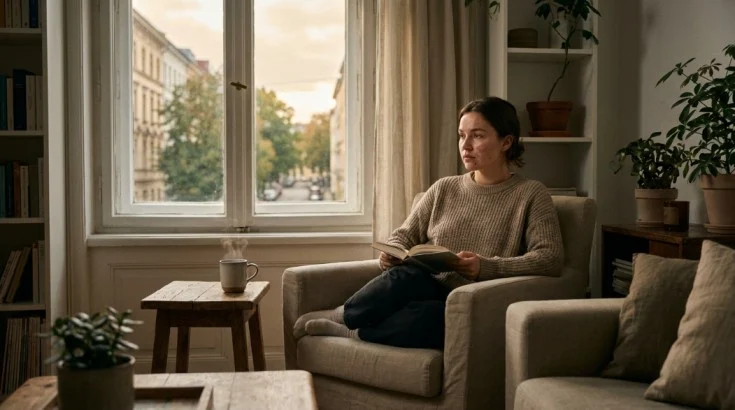
If you enjoy your own company, prefer a quiet evening over a crowded party, or need some alone time after a busy day, you may have wondered about the introvert meaning. An introvert is generally a person who feels more comfortable with lower-stimulation environments and often restores their energy through solitude or calm, meaningful interaction.
Being an introvert does not automatically mean being shy, antisocial, unfriendly, or afraid of people. An introvert can enjoy friendships, conversations, teamwork, dating, travel, and public speaking. The difference often comes down to how a person responds to social stimulation and where they naturally feel most recharged.
Understanding introversion becomes much easier when you look beyond stereotypes. It is not simply about being quiet. It is a personality tendency that can influence social preferences, communication styles, relationships, and the way someone spends their free time.
What Does Introvert Mean?
An introvert is a person who tends to prefer quieter surroundings, smaller social settings, or time alone and may feel mentally refreshed after periods of solitude.
In simple words, an introvert often has a strong need for personal space and may enjoy socializing in smaller doses.
For example, imagine two friends attending a large party. One stays for hours, talks to dozens of people, and leaves feeling energized. The other has a great time talking with two close friends but feels ready to go home after a few hours.
The second person may have more introverted tendencies.
This does not mean the person disliked the party. It simply means a long period of intense social stimulation may be tiring.
Simple Definition of an Introvert
Introvert: A person who generally prefers lower-stimulation environments, meaningful interaction, and time alone or in small groups to recharge.
The important word is generally. People are not identical, and introversion exists on a spectrum. Someone can have introverted tendencies while still being highly social in certain situations.
Introversion Meaning in Psychology
Introversion is commonly discussed as a personality dimension alongside extraversion.
The idea became especially influential through the work of Swiss psychiatrist Carl Jung, who used introversion and extraversion to describe different orientations of psychological energy and attention.
Modern personality psychology does not treat introversion as a simple label that explains an entire person. Instead, introversion and extraversion are better understood as tendencies that can influence how people respond to stimulation and social environments.
The Big Five personality model, one of the major frameworks used in contemporary personality research, places extraversion on a spectrum. A person who scores lower in extraversion may show characteristics commonly associated with introversion.
This distinction matters because personality is more complicated than a two-box system.
- You can be introverted and confident.
- You can be introverted and highly talkative with close friends.
- You can be introverted and successful in leadership.
- You can also become more socially comfortable through experience.
Common Traits of an Introvert
There is no single personality profile that describes every introvert. Still, several characteristics commonly appear.
1. They Enjoy Solitude
Many introverts genuinely enjoy spending time alone.
Reading, listening to music, walking, writing, gaming, cooking, watching a movie, or simply sitting quietly can feel satisfying rather than lonely.
For an introvert, solitude can be active recovery rather than isolation.
2. They Prefer Meaningful Conversations
Small talk is not necessarily impossible for an introvert, but many introverted people prefer conversations with more substance.
A long discussion about someone’s goals, ideas, experiences, or interests may feel more rewarding than moving from one casual conversation to another.
3. They May Prefer Small Groups
A crowded room can contain dozens of interesting people, but an introvert may feel more comfortable talking with one person or a small group.
This is why an introvert can be socially engaged while still avoiding very large gatherings.
4. They Need Alone Time After Socializing
An introvert may have a wonderful evening with friends and still want quiet time afterward.
This is sometimes described as needing to recharge their social battery.
The need for recovery does not mean the social experience was bad.
5. They Often Think Before Speaking
Some introverted people prefer to process their thoughts before responding.
In a fast-moving group conversation, they may speak less frequently but contribute carefully considered ideas.
This is a tendency, not a rule.
6. They May Prefer Written Communication
Some introverts enjoy texting, email, journaling, or written discussions because these formats provide more time to organize thoughts.
That does not mean every introvert dislikes phone calls or face-to-face conversations.
7. They Often Value Personal Space
An introverted person may be protective of uninterrupted time.
After a demanding day at work or school, even a short period without conversation can feel refreshing.
Signs You Might Be an Introvert
No single sign proves that someone is an introvert. However, you may recognize yourself in several of these patterns:
- You enjoy spending time by yourself.
- You prefer a few close friends to a huge social circle.
- Large gatherings can leave you mentally tired.
- You enjoy deep conversations.
- You often think before speaking.
- You appreciate quiet environments.
- You need alone time after busy social events.
- You prefer independent activities.
- You can socialize comfortably but do not always seek it out.
- You enjoy having uninterrupted time for your hobbies.
- You may prefer planning your thoughts before discussing important topics.
- You feel comfortable entertaining yourself.
The key is the overall pattern, not one isolated behavior.
For example, enjoying a quiet Sunday alone does not automatically make someone an introvert. An extroverted person can enjoy solitude too.
Introvert vs. Extrovert
The simplest way to understand the difference is to think about social stimulation and energy.
| Introvert | Extrovert |
|---|---|
| Often prefers quieter environments | Often enjoys stimulating environments |
| May prefer small groups | May enjoy large groups |
| Often values substantial conversations | May enjoy frequent social interaction |
| May need solitude to recharge | May feel energized by social activity |
| Can enjoy social events but may tire sooner | May seek out social events more frequently |
| Often enjoys independent activities | May enjoy collaborative activities |
| May process thoughts internally first | May think aloud more often |
These are tendencies, not strict rules.
An introvert can love parties. An extrovert can love reading alone.
The real difference is often what feels restorative and what level of stimulation feels comfortable.
Introvert vs. Ambivert
An ambivert describes someone who shows a mixture of introverted and extroverted tendencies.
For example, someone might enjoy spending Friday night with friends, spend Saturday alone reading, and feel equally comfortable in both situations.
Many people do not fit neatly into an introvert or extrovert category.
Personality exists along dimensions rather than functioning like two completely separate teams.
Introvert vs. Shy
This is one of the most important distinctions.
Introversion is not the same as shyness.
Shyness usually involves discomfort, self-consciousness, or nervousness in social situations.
Introversion refers more broadly to a preference or tendency toward lower stimulation and solitude.
Consider two people at a networking event.
Person A:
They feel perfectly confident talking to others but would rather have a quiet evening afterward.
Person B:
They want to meet people but feel nervous, worried about being judged, and struggle to start conversations.
- Person A may be introverted.
- Person B may be shy.
A person can also be both introverted and shy, but the concepts are not interchangeable.
Introvert vs. Social Anxiety
Introversion should also be separated from social anxiety.
Social anxiety involves significant fear or anxiety around social or performance situations. It can interfere with everyday life and may cause someone to avoid situations they actually want to participate in.
An introvert, on the other hand, may simply prefer less social stimulation.
For example:
“I could go to the party, but I’d rather stay home and read.”
This can reflect introversion.
Compare that with:
“I want to go, but I’m terrified everyone will judge me.”
That may point toward social anxiety.
If anxiety is persistent, intense, or interfering with daily life, speaking with a qualified mental health professional can be helpful.
Are Introverts Antisocial?
No.
This is one of the most common misconceptions about introverted people.
Antisocial does not simply mean “does not like socializing.” In everyday conversation, people often use the word incorrectly to describe someone who prefers solitude.
An introvert can have close friendships, romantic relationships, professional networks, and a lively social life.
They may simply choose their interactions more selectively.
A person can love people and still love being alone.
Do Introverts Hate People?
Definitely not.
Many introverts enjoy people deeply. They may simply prefer quality over quantity when it comes to social interaction.
An introvert might spend three hours talking with a close friend and enjoy every minute, then want several hours alone afterward.
The need for solitude says little about how much someone cares about other people.
Introverts in Everyday Life
Introversion can look different depending on the situation.
At Work
An introverted employee may prefer:
- Focused individual work
- Written instructions
- Smaller meetings
- Time to prepare before presentations
- Quiet working environments
- One-on-one discussions
This does not mean an introvert cannot lead a team or speak confidently.
In fact, someone who listens carefully and thinks before responding can bring valuable qualities to group work.
At School or College
An introverted student might enjoy independent assignments but feel drained by constant group activities.
They may participate less frequently in class while still understanding the material extremely well.
Teachers and classmates should avoid assuming that speaking less means knowing less.
In Friendships
Introverted people may have fewer close friends rather than a huge social circle.
A friendship can become especially meaningful when there is trust, emotional safety, and shared interests.
For some introverts, one honest conversation can be more satisfying than an entire evening of casual interaction.
In Relationships
An introvert can be affectionate, romantic, funny, adventurous, and emotionally expressive.
They may simply appreciate quiet dates, private conversations, shared hobbies, or relaxed time together.
A healthy relationship does not require two people to have identical social preferences.
Common Misconceptions About Introverts
“Introverts are always quiet.”
Not necessarily.
Some introverts are extremely talkative around people they trust or when discussing subjects they love.
“Introverts are lonely.”
Solitude and loneliness are different experiences.
Solitude is time spent alone by choice or comfort.
Loneliness is a painful feeling of lacking meaningful connection.
An introvert can experience either one.
“Introverts are bad at communication.”
Communication ability is not determined by personality type.
An introvert can be an excellent writer, speaker, listener, negotiator, teacher, or leader.
“Introverts don’t like social events.”
Many introverts enjoy social events. They may simply prefer shorter events, smaller groups, or time to recover afterward.
“Introversion needs to be fixed.”
Introversion is not a disease or defect.
There is no reason to “cure” someone simply because they prefer quiet environments.
Strengths Often Associated With Introversion
Introversion can come with useful tendencies, especially when they are supported by confidence and experience.
Deep Focus
Quiet environments may make it easier for some people to concentrate on demanding tasks.
Thoughtful Listening
A tendency to listen carefully can help during conversations, teamwork, and conflict resolution.
Independent Work
Introverted people may be comfortable working independently without constant social interaction.
Reflection
Time alone can provide space for thinking, creativity, planning, and self-reflection.
Meaningful Relationships
A preference for smaller social circles can allow someone to invest deeply in selected relationships.
Creativity
Solitude can create room for activities such as writing, art, music, research, and problem-solving.
These are possibilities, not guarantees. Personality does not automatically give someone a particular skill.
Challenges Introverts May Experience
Introversion is not automatically a disadvantage, but certain environments can be tiring.
An office filled with constant interruptions may be difficult for someone who thrives on concentration.
A school that rewards speaking frequently may overlook students who process ideas internally.
Large networking events can also be exhausting.
The useful approach is not to force every introvert into an extroverted mold. Instead, people can develop social skills while also respecting their natural need for recovery.
For example, an introvert can learn to network without becoming the loudest person in the room.
They can prepare a few conversation starters, focus on one meaningful conversation at a time, and take short breaks when needed.
How to Communicate With an Introvert
If you work with or care about an introverted person, a few simple approaches can make communication easier.
- Give them time to think about complex questions.
- Do not assume quietness means disinterest.
- Respect their need for personal space.
- Avoid forcing them into unnecessary social situations.
- Pay attention to what they actually say rather than how frequently they speak.
- Use one-on-one conversations when appropriate.
- Give advance notice for major meetings or events when possible.
- Do not label them as shy simply because they are quiet.
Good communication starts with understanding the individual rather than relying on a personality stereotype.
Real-Life Example of an Introvert
Imagine Sara, a university student.
Sara enjoys spending time with three close friends. She can talk for hours about books, travel, and her career plans.
At a large university event, however, she becomes quieter. After several hours of conversation and noise, she goes home and spends the evening reading.
Her friends sometimes joke that she “doesn’t like people.”
That conclusion misses the point.
Sara clearly enjoys relationships. She simply prefers smaller interactions and quiet recovery time.
Her behavior is consistent with introverted tendencies.
Now imagine another student, Ali, who loves large gatherings, starts conversations with strangers, and often feels more energetic after spending an evening around people.
Ali may have more extroverted tendencies.
Neither approach is automatically better.
Can an Introvert Become More Outgoing?
Yes.
Personality tendencies can remain relatively stable while behavior, confidence, communication skills, and social comfort change.
An introverted person can learn to:
- Speak confidently in meetings
- Give presentations
- Meet new people
- Network professionally
- Make small talk
- Lead teams
- Attend social events
- Build a large professional network
Learning these skills does not require becoming a completely different person.
The goal is not to eliminate introversion. It is to become comfortable doing things that matter to you, even when they require more social energy.
How to Know If You Are an Introvert
Instead of asking, “Am I quiet?” consider broader questions:
- Do I usually prefer smaller gatherings?
- Do I enjoy spending time alone?
- Do long social events leave me mentally tired?
- Do I prefer deep conversations over constant casual interaction?
- Do I feel restored after quiet time?
- Can I socialize confidently but still prefer less of it?
- Do I naturally enjoy independent hobbies?
- Do I often need time to process my thoughts?
If many of these describe you, you may have introverted tendencies.
A personality label should be useful, not restrictive. You do not need to fit every characteristic to relate to introversion.
Frequently Asked Questions
What is the introvert meaning in simple words?
An introvert is generally someone who prefers quieter environments, smaller social interactions, and time alone to recharge. Introversion is a personality tendency, not a sign that someone dislikes people.
Is an introvert a shy person?
Not necessarily. Shyness involves social nervousness or self-consciousness, while introversion is more closely related to preferences around stimulation and social interaction. A person can be confident and introverted.
What are the main characteristics of an introvert?
Common characteristics include enjoying solitude, preferring smaller groups, valuing meaningful conversations, needing recovery time after social activity, and enjoying independent activities. Not every introvert has all of these traits.
Do introverts like being alone?
Many introverts enjoy solitude because it can help them relax, concentrate, reflect, or recharge. Enjoying alone time does not automatically mean someone is lonely.
Can an introvert be social?
Yes. Introverts can have active social lives, close friendships, successful careers, and strong communication skills. They may simply prefer a different amount or type of social interaction.
What is the difference between an introvert and an extrovert?
Introverts generally tend to prefer lower levels of social stimulation and may recharge through solitude. Extroverts generally tend to seek more social stimulation and may feel energized by frequent interaction. People can also fall somewhere between these tendencies.
Are introverts antisocial?
No. Introversion and being antisocial are not the same thing. An introvert can enjoy relationships and social activities while still needing significant personal space.
Can an introvert become an extrovert?
People can become more socially confident and change their behavior, but they do not necessarily need to stop having introverted preferences. Personality traits exist on dimensions, and people can behave differently across situations.
Is introversion a bad thing?
No. Introversion is a normal personality tendency. It can be associated with preferences for reflection, focused work, smaller groups, and meaningful conversations. Its value depends on the person and situation, not on a simple “good” or “bad” label.
Final Thoughts
The simplest introvert meaning is a person who generally prefers lower-stimulation environments and often finds solitude or smaller social settings restorative. But that definition is only the starting point.
An introvert can be confident, ambitious, funny, romantic, socially skilled, and deeply connected to other people. They may enjoy a party and still want a quiet evening afterward. They may speak less in a crowded room yet have plenty to say when the conversation becomes meaningful.
The biggest mistake is treating introversion as a rigid personality box. People are more complicated than labels. Understanding introversion is really about recognizing different ways people experience social energy, connection, attention, and personal space.
Discover More Post:
- FAFO Meaning | What This Bold Internet Slang Really Means …
- TLDR Meaning Explained | The Internet Shortcut Behind …
- What Does Zionist Really Mean? History, Beliefs & the Story …
