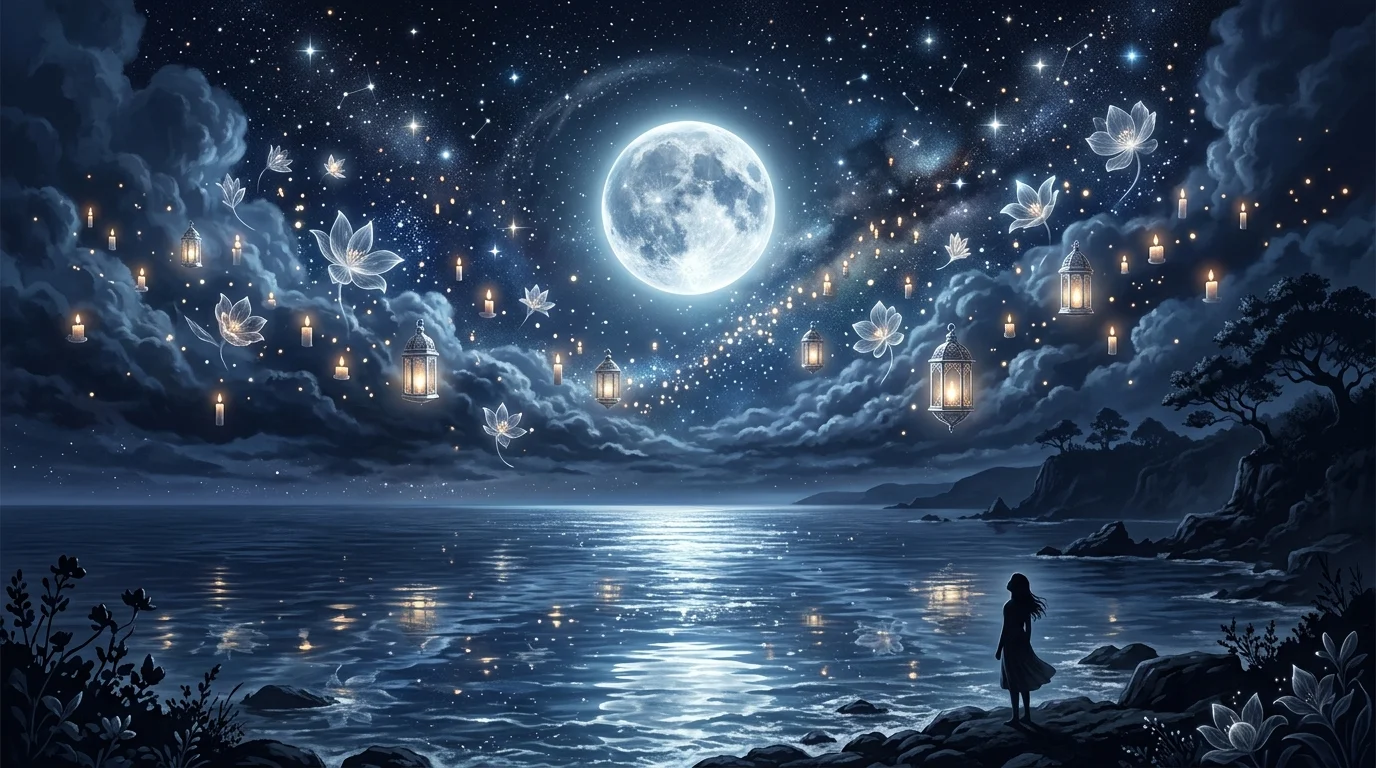
The moon has always carried mystery. Long before modern storytelling, people looked toward the night sky and found comfort, loneliness, romance, fear, and wonder reflected in its pale glow. That is why moon metaphors appear so often in poetry, novels, songs, and emotional writing. The moon feels symbolic even before a writer gives it meaning.
Sometimes the moon becomes a quiet guardian watching over sleeping cities. Other times, it feels like a silver coin tossed across darkness or a lonely lantern floating above the world. A strong metaphor transforms the moon from an object in the sky into an emotional presence readers can actually feel.
Writers use metaphors for the moon to create atmosphere, deepen imagery, and add emotional texture to storytelling. Whether you are writing poetry, fiction, captions, essays, or descriptive prose, moon metaphors can make scenes feel softer, dreamier, and far more memorable.
Quick Metaphors for the Moon
- The moon is a silver lantern
- The moon is a lonely traveler
- The moon is a pearl in black velvet
- The moon is a silent guardian
- The moon is a cracked mirror
- The moon is a sleeping eye
- The moon is a floating candle
- The moon is a ghostly flower
- The moon is a forgotten coin
- The moon is a lighthouse in darkness
Metaphors for the Moon and Their Meanings
| Moon Metaphor | Meaning |
|---|---|
| Silver Lantern | Guidance and hope |
| Pearl in Velvet | Beauty against darkness |
| Sleeping Eye | Quiet observation |
| Floating Candle | Warmth in darkness |
| Cracked Mirror | Emotional mystery |
| Lonely Traveler | Isolation and distance |
| Ghostly Flower | Delicate beauty |
| Lighthouse | Protection and calmness |
| Forgotten Coin | Faded wonder |
| Silent Guardian | Peaceful watchfulness |
1. The Moon Is a Silver Lantern
Meaning
The moon provides guidance, comfort, and light during darkness.
Why This Metaphor Works
Lantern imagery creates warmth and quiet hope, making it perfect for emotional or reflective writing.
Alternative Expression
“The moon hung like a glowing lantern above the world.”
Examples in Writing
Formal Example
The moon became a silver lantern guiding travelers through the night.
Casual Example
The moon looked like a giant lantern outside my window.
Creative Example
A silver lantern floated above the sleeping earth, glowing softly against the dark sky.
2. The Moon Is a Pearl in Black Velvet
Meaning
The moon stands out beautifully against the darkness of the night sky.
Why This Metaphor Works
Pearls symbolize elegance and rarity, while velvet creates softness and richness.
Alternative Expression
“The moon rested like a pearl on velvet skies.”
Examples in Writing
Formal Example
The full moon resembled a pearl resting in black velvet.
Casual Example
Tonight’s moon looked incredibly bright against the dark sky.
Creative Example
A pale pearl shimmered inside the velvet folds of midnight.
3. The Moon Is a Lonely Traveler
Meaning
The moon symbolizes solitude, distance, or quiet wandering.
Why This Metaphor Works
This metaphor creates emotional depth and works beautifully in poetry and reflective storytelling.
Alternative Expression
“The moon drifted like a silent traveler through the sky.”
Examples in Writing
Formal Example
The moon crossed the heavens like a lonely traveler.
Casual Example
The moon looked so isolated tonight.
Creative Example
A lonely traveler wandered slowly above sleeping rooftops and silent oceans.
4. The Moon Is a Cracked Mirror
Meaning
The moon reflects mystery, emotional fragmentation, or imperfect beauty.
Why This Metaphor Works
Mirror imagery creates emotional symbolism and haunting atmosphere.
Alternative Expression
“The moon looked like shattered glass in the sky.”
Examples in Writing
Formal Example
Clouds drifted across the moon like cracks spreading across a mirror.
Casual Example
The moon looked broken behind the clouds tonight.
Creative Example
A cracked mirror hung above the earth, reflecting forgotten dreams.
5. The Moon Is a Silent Guardian
Meaning
The moon watches peacefully over the world.
Why This Metaphor Works
This metaphor creates comfort, stillness, and emotional calmness.
Alternative Expression
“The moon watched quietly over the sleeping city.”
Examples in Writing
Formal Example
The moon remained a silent guardian over the quiet village.
Casual Example
The moon felt calming tonight.
Creative Example
A silent guardian stood above the rooftops while the world drifted into sleep.
6. The Moon Is a Floating Candle
Meaning
The moon brings warmth and light to darkness.
Why This Metaphor Works
Candles symbolize comfort, intimacy, and gentle hope.
Alternative Expression
“The moon flickered softly above the clouds.”
Examples in Writing
Formal Example
The moon resembled a floating candle above the sea.
Casual Example
The moon looked soft and glowing tonight.
Creative Example
A floating candle burned quietly in the endless darkness of the sky.
7. The Moon Is a Sleeping Eye
Meaning
The moon quietly watches over the earth.
Why This Metaphor Works
Eye imagery creates mystery and emotional tension without feeling aggressive.
Alternative Expression
“The moon hovered like a half closed eye.”
Examples in Writing
Formal Example
The pale moon resembled a sleeping eye in the heavens.
Casual Example
The moon looked like it was staring down at everything.
Creative Example
A silver eye rested above the world, half dreaming and half awake.
8. The Moon Is a Ghostly Flower
Meaning
The moon symbolizes delicate beauty and fragility.
Why This Metaphor Works
Flower imagery adds softness and poetic elegance to night scenes.
Alternative Expression
“The moon bloomed softly in the dark sky.”
Examples in Writing
Formal Example
The moon opened above the horizon like a ghostly flower.
Casual Example
The moon looked beautiful and delicate tonight.
Creative Example
A pale flower bloomed quietly between drifting clouds.
9. The Moon Is a Forgotten Coin
Meaning
The moon represents old beauty, fading wonder, or quiet nostalgia.
Why This Metaphor Works
Coins suggest age, history, and something valuable left unnoticed.
Alternative Expression
“The moon glimmered like an ancient coin.”
Examples in Writing
Formal Example
The moon hung above the mountains like a forgotten coin.
Casual Example
The moon looked old and faded tonight.
Creative Example
An ancient coin shimmered faintly in the pockets of the night.
10. The Moon Is a Lighthouse in Darkness
Meaning
The moon offers direction and hope during emotional darkness.
Why This Metaphor Works
Lighthouse imagery creates safety and emotional reassurance.
Alternative Expression
“The moon guided the night like a distant lighthouse.”
Examples in Writing
Formal Example
The moon served as a lighthouse for sailors crossing the sea.
Casual Example
The moon made the night feel less empty.
Creative Example
A pale lighthouse glowed above the dark ocean of the sky.
11. The Moon Is a Piece of Frozen Fire
Meaning
The moon appears bright and powerful while remaining cold and distant.
Why This Metaphor Works
The contrast between fire and ice creates emotional tension and vivid imagery.
Alternative Expression
“The moon burned with cold light.”
Examples in Writing
Formal Example
The moon resembled a piece of frozen fire above the horizon.
Casual Example
The moon looked bright but strangely cold tonight.
Creative Example
Frozen fire drifted across the heavens, glowing without warmth.
12. The Moon Is a White Rose
Meaning
The moon symbolizes purity, softness, and romantic beauty.
Why This Metaphor Works
Rose imagery naturally creates elegance and emotional tenderness.
Alternative Expression
“The moon unfolded like a pale rose.”
Examples in Writing
Formal Example
The moon bloomed above the trees like a white rose.
Casual Example
The moon looked soft and beautiful tonight.
Creative Example
A white rose opened silently in the garden of the sky.
13. The Moon Is a Watchful Ghost
Meaning
The moon creates mystery, silence, and haunting atmosphere.
Why This Metaphor Works
Ghost imagery adds emotional tension and dramatic mood to storytelling.
Alternative Expression
“The moon floated like a pale ghost.”
Examples in Writing
Formal Example
The moon drifted above the hills like a watchful ghost.
Casual Example
The moon gave the whole night a spooky feeling.
Creative Example
A silent ghost wandered above abandoned streets and sleeping forests.
14. The Moon Is a Boat on Dark Waters
Meaning
The moon moves peacefully through the night sky.
Why This Metaphor Works
Boat imagery creates motion, calmness, and dreamlike atmosphere.
Alternative Expression
“The moon sailed slowly through darkness.”
Examples in Writing
Formal Example
The moon floated across the heavens like a lonely boat.
Casual Example
The moon looked like it was drifting through the sky.
Creative Example
A silver boat crossed the dark waters of midnight without a sound.
15. The Moon Is a Whisper in the Sky
Meaning
The moon symbolizes softness, silence, and emotional intimacy.
Why This Metaphor Works
Whisper imagery creates quiet emotional beauty.
Alternative Expression
“The moon spoke softly to the night.”
Examples in Writing
Formal Example
The moon remained a whisper above the silent valley.
Casual Example
The moon made everything feel calm tonight.
Creative Example
A silver whisper drifted through the sky while the world fell asleep.
16. The Moon Is a Shattered Plate
Meaning
The moon appears broken, uneven, or emotionally haunting.
Why This Metaphor Works
This metaphor creates visual texture and dramatic imagery.
Alternative Expression
“The moon looked chipped and broken.”
Examples in Writing
Formal Example
The crescent moon resembled a shattered plate above the hills.
Casual Example
The moon looked cracked tonight.
Creative Example
Pieces of silver porcelain hung quietly above the dark world.
17. The Moon Is a Sleeping Lantern Fish
Meaning
The moon glows mysteriously in deep darkness.
Why This Metaphor Works
This unusual metaphor creates originality and dreamlike imagery.
Alternative Expression
“The moon glimmered like a creature beneath dark waters.”
Examples in Writing
Formal Example
The moon floated above the sea like a sleeping lantern fish.
Casual Example
The moon looked strange and glowing tonight.
Creative Example
A glowing creature drifted silently through the deep ocean of the sky.
18. The Moon Is a Pale Heart
Meaning
The moon represents emotion, longing, and vulnerability.
Why This Metaphor Works
Heart imagery naturally creates emotional connection and tenderness.
Alternative Expression
“The moon pulsed softly above the earth.”
Examples in Writing
Formal Example
The moon hung above the city like a pale heart.
Casual Example
The moon felt emotional somehow tonight.
Creative Example
A pale heart beat quietly inside the chest of midnight.
19. The Moon Is a Curtain Lamp
Meaning
The moon softly illuminates darkness from behind clouds.
Why This Metaphor Works
The image feels warm, domestic, and visually gentle.
Alternative Expression
“The moon glowed behind clouds like a hidden lamp.”
Examples in Writing
Formal Example
Clouds covered the moon like curtains around a glowing lamp.
Casual Example
The moon looked hidden but bright tonight.
Creative Example
A hidden lamp glowed softly behind drifting curtains of cloud.
20. The Moon Is an Ancient Clock
Meaning
The moon symbolizes time, cycles, and quiet permanence.
Why This Metaphor Works
Clock imagery connects the moon to rhythm, memory, and passing time.
Alternative Expression
“The moon marked the passing night like an old clock.”
Examples in Writing
Formal Example
The moon remained an ancient clock above the restless earth.
Casual Example
The moon made the night feel timeless.
Creative Example
An ancient clock drifted across the heavens, counting silent hours in silver light.
Positive Moon Metaphors
Positive moon metaphors create calmness, romance, and emotional warmth.
Examples include:
- The moon is a silver blessing
- The moon is a glowing pearl
- The moon is a peaceful lantern
- The moon is a guardian of dreams
- The moon is a soft candle in darkness
These metaphors work beautifully in romantic writing and peaceful storytelling.
Dark and Emotional Moon Metaphors
Some moon metaphors create loneliness, mystery, or emotional tension.
Examples include:
- The moon is a broken mirror
- The moon is a lonely widow
- The moon is a ghost wandering the sky
- The moon is a fading memory
- The moon is a scar across darkness
These images are especially effective in poetry and dramatic fiction.
Moon Metaphors in Poetry and Storytelling
Writers often use moon metaphors to deepen atmosphere and emotional tone. In poetry, the moon may symbolize love, longing, mystery, femininity, loneliness, or transformation.
For example, instead of writing:
“The night was beautiful.”
You could write:
“A silver lantern floated above the sleeping world.”
This creates stronger imagery and emotional immersion. Great descriptive writing often depends on turning ordinary scenes into memorable visual experiences.
How to Use Moon Metaphors Naturally
The best moon metaphors match the emotional tone of the scene. Soft metaphors work beautifully in romance and reflective writing, while darker metaphors fit suspenseful or emotional stories.
Avoid forcing overly dramatic comparisons into simple scenes. Sometimes a quiet image creates the strongest impact.
Professional writers often connect moon imagery with:
- Water
- Silence
- Dreams
- Loneliness
- Romance
- Memory
- Shadows
- Time
Metaphor vs Simile
A metaphor directly becomes the image.
- “The moon is a pearl in velvet.”
A simile compares using “like” or “as.”
- “The moon shone like a pearl in velvet.”
Metaphors often feel stronger because they create immediate emotional imagery.
Tips for Creating Original Moon Metaphors
- Observe the moon during different weather and seasons
- Think about texture, color, and emotional tone
- Use unusual but clear imagery
- Match the metaphor to the mood of the writing
- Draw inspiration from water, silver, mirrors, candles, flowers, and dreams
Some of the strongest moon metaphors are simple because simplicity often feels more emotionally believable.
Frequently Asked Questions
What are metaphors for the moon?
Moon metaphors are creative comparisons that describe the moon using symbolic or emotional imagery.
Why do writers use moon metaphors?
Writers use moon metaphors to create atmosphere, emotional depth, romance, mystery, and vivid visual imagery.
What does the moon usually symbolize?
The moon often symbolizes mystery, femininity, dreams, loneliness, calmness, transformation, and emotional reflection.
Are moon metaphors common in poetry?
Yes. Moon imagery has been used in poetry for centuries because it naturally creates emotional and visual beauty.
What are romantic metaphors for the moon?
Popular romantic moon metaphors include silver lantern, white rose, glowing pearl, and floating candle.
What are dark metaphors for the moon?
Dark moon metaphors include broken mirror, ghost, scar across darkness, and lonely traveler.
What is the difference between a metaphor and a simile?
A metaphor directly states something is another thing, while a simile uses “like” or “as” for comparison.
Can moon metaphors improve storytelling?
Absolutely. They help scenes feel more emotional, cinematic, and immersive.
How do I create original moon metaphors?
Focus on the mood of the scene and connect the moon to objects, emotions, or textures that visually match the feeling.
Where are moon metaphors most commonly used?
Moon metaphors appear in poetry, fiction, songs, captions, speeches, and descriptive storytelling.
Conclusion
The moon has inspired writers for centuries because it naturally carries emotion, mystery, and beauty. A strong moon metaphor can transform an ordinary night scene into something unforgettable. Instead of simply describing the moon, metaphors allow readers to feel its silence, loneliness, warmth, or haunting glow.
the moon becomes a silver lantern, a cracked mirror, or a lonely traveler, the image adds emotional texture that plain description often cannot achieve. That is why moon metaphors remain so powerful in poetry, storytelling, and creative writing.
The best metaphors are not always the most complicated ones. Often, the strongest imagery comes from simple emotional truth and clear visual detail. When a metaphor feels natural to the mood of the scene, it stays in the reader’s imagination long after the sentence ends.
Discover More Post
20+ Metaphors for Water That Add Flow, Emotion, and Depth …
20+ Metaphors for Truth That Add Depth and Meaning to Writing
