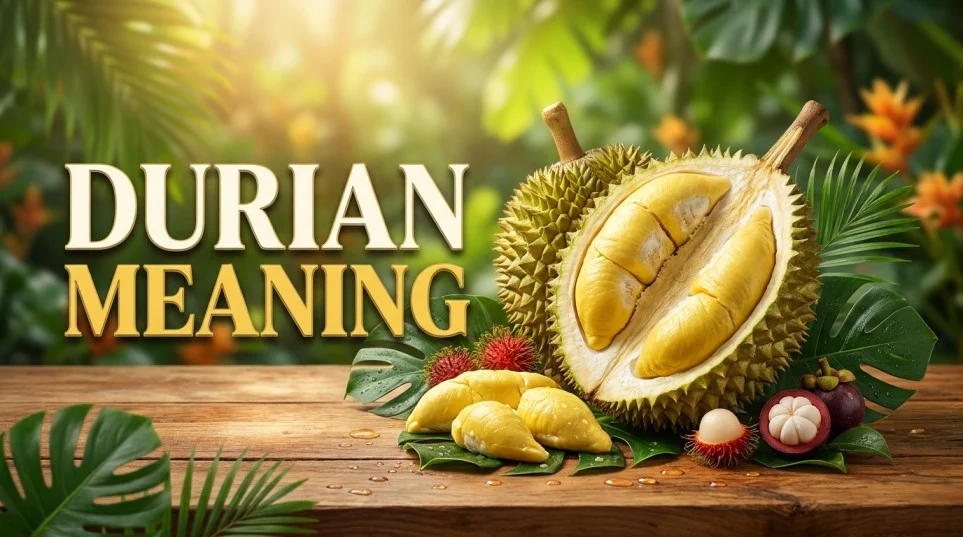
Imagine opening a fruit that smells so powerful it can fill an entire room, yet people travel thousands of miles to enjoy its creamy, sweet flesh. That fruit is durian, one of the most distinctive tropical fruits in the world.
The durian meaning refers to a large tropical fruit known for its hard, thorn-covered shell, soft edible flesh, and unusually strong aroma. Native to Southeast Asia, durian is especially popular in countries such as Malaysia, Thailand, and Indonesia. Its appearance might seem intimidating, but inside are soft, custard-like sections that many people consider a delicacy.
Durian is often called the king of fruits because of its size, rich flavor, and cultural importance. Some people love its sweetness and creamy texture, while others find its smell overwhelming. Understanding this unusual fruit means looking beyond its reputation and discovering what makes it so fascinating.
What Is Durian?
Durian is a tropical fruit that grows on trees belonging to the genus Durio. The species most commonly associated with the fruit sold in markets is Durio zibethinus.
Its most recognizable feature is its thick outer shell covered with sharp, pointed spikes. Inside, the fruit contains several sections of pale yellow, golden, or creamy flesh surrounding large seeds.
Unlike apples or oranges, durian has a rich texture and a strong aroma that can be noticeable even before the fruit is opened.
The fruit grows in warm, humid environments and is widely cultivated across Southeast Asia. It is eaten fresh and used in desserts, pastries, ice cream, candies, and other regional dishes.
In simple words: Durian is a spiky tropical fruit famous for its creamy flesh, distinctive smell, and rich flavor.
What Does the Word Durian Mean?

The word durian comes from the Malay word duri, which means “thorn” or “spike.” The name refers directly to the fruit’s sharp outer covering.
This makes the name easy to understand once you see the fruit. Its rough, thorny exterior is one of the first things people notice.
The English word durian is used for the fruit itself. It does not generally describe a personality trait, emotion, or symbolic idea.
Here is a quick breakdown:
| Feature | Explanation |
|---|---|
| Word | Durian |
| Word origin | Malay |
| Root word | Duri |
| Root meaning | Thorn or spike |
| Word type | Noun |
| Main reference | A tropical fruit |
| Scientific name | Durio zibethinus for the commonly cultivated species |
For example, someone might say, “I tried durian for the first time while visiting Malaysia.”
In this sentence, durian simply names the fruit being eaten.
What Does Durian Look Like?

Durian looks very different from the fruit most people see in an ordinary grocery store.
It is usually oval or round, with a greenish, yellowish, or brownish outer shell depending on its variety and ripeness. Its thick surface is covered in sharp spikes that protect the fruit’s inner flesh.
When opened, the shell reveals separate pockets of soft pulp. The edible sections can range from pale cream to deep golden yellow.
Large seeds sit inside the flesh and are generally removed before the fruit is eaten fresh.
The contrast is striking: the outside looks rough and almost defensive, while the inside is soft and rich.
This unusual appearance also explains why durian can seem unfamiliar to someone encountering it for the first time.
What Does Durian Taste Like?
Durian has a complex flavor that is difficult to compare with a single familiar food.
Many ripe varieties taste sweet, creamy, and rich. Depending on the variety and ripeness, people may notice notes resembling vanilla custard, caramel, almonds, or ripe tropical fruit. Some varieties also have bitter, savory, or onion-like undertones.
Its texture is often compared to thick custard or pudding. Unlike crisp fruits, durian feels soft and almost buttery in the mouth.
The flavor can change considerably depending on the variety, growing conditions, and stage of ripeness.
For example, a person trying a sweet, ripe variety may find it pleasantly rich, while someone tasting a more bitter variety may experience a much stronger and less familiar flavor.
Is Durian Sweet or Savory?
Durian can be both, although sweetness is a major feature of many popular varieties.
| Flavor characteristic | What it may taste like |
|---|---|
| Sweet | Caramel, vanilla, or ripe fruit |
| Creamy | Custard or thick pudding |
| Nutty | Mild almond-like notes |
| Bitter | A noticeable aftertaste in some varieties |
| Savory | Onion-like or fermented notes in some fruits |
If you dislike intensely aromatic foods, durian may take some getting used to. If you enjoy rich desserts and unusual tropical flavors, a sweet variety might appeal to you.
The best way to understand its taste is to try a small portion of ripe durian rather than relying entirely on other people’s descriptions.
Why Does Durian Smell So Strong?
Durian’s smell comes from a mixture of volatile chemical compounds released by the fruit. Researchers have identified numerous aroma-producing compounds, including sulfur-containing compounds that contribute to its powerful and sometimes onion-like or pungent smell.
Different compounds combine to create a complex aroma. Some notes may seem fruity or sweet, while others can remind people of garlic, cooked onions, or fermented foods.
This explains why two people can smell the same durian and react differently.
One person may focus on its sweet, rich aroma. Another may notice the sharper sulfurous notes and find the smell unpleasant.
Ripeness, variety, storage conditions, and individual sensitivity can also affect the experience.
Why Is Durian Banned in Some Hotels and Public Transport?
Some hotels, apartment buildings, and public transportation systems in Southeast Asia restrict durian because its odor can linger in enclosed spaces.
The rules depend on the individual property or transport operator. There is no universal ban covering every hotel or public transport system.
The reason is practical: a strong smell can be difficult to remove from upholstery, rooms, and ventilation systems, potentially disturbing other passengers or guests.
If you plan to try durian while traveling, check local rules before carrying it into a hotel or onto public transport.
Why Is Durian Called the King of Fruits?
Durian is commonly called the king of fruits in Southeast Asia because of its distinctive appearance, rich flesh, cultural importance, and popularity among fruit enthusiasts.
The nickname is a cultural expression rather than a scientific ranking. It does not mean durian is objectively the healthiest or best-tasting fruit.
Several characteristics help explain its reputation:
- Distinctive appearance: Its large, spiky shell makes it instantly recognizable.
- Rich texture: The soft flesh has a creamy consistency unlike that of many common fruits.
- Powerful aroma: Its unusual smell makes the fruit memorable.
- Regional popularity: Durian has a strong place in the food traditions of several Southeast Asian countries.
- Premium varieties: Some highly prized cultivars can command high prices, particularly during periods of strong demand.
For many enthusiasts, eating durian is a seasonal experience. They compare varieties, discuss flavor differences, and travel to regions known for particular cultivars.
Its reputation is built on a combination of taste, tradition, and identity, not just its physical size.
Where Does Durian Grow?
Durian grows in tropical climates with warm temperatures, high humidity, and substantial rainfall.
The fruit is strongly associated with Southeast Asia, where it has been cultivated and consumed for generations.
Major producing countries include:
- Thailand
- Malaysia
- Indonesia
- Vietnam
- The Philippines
Durian is also grown in other tropical regions where suitable conditions exist.
The trees can become large and produce heavy fruits. Harvesting practices vary by region and cultivar. Some durians are collected after falling naturally, while commercial growers may use other methods to manage harvest timing and fruit quality.
When Is Durian in Season?
The durian season varies according to the country, region, weather, and cultivar.
Some growing areas have a major harvest season and a smaller secondary season. Others experience different harvesting periods because of local rainfall patterns and growing conditions.
This means durian is not available at the same price or quality throughout the year in every market.
If you want to taste fresh durian, local seasonal markets can be a useful place to start. Ask sellers about the variety, ripeness, and harvest date.
Popular Types of Durian
Not all durians taste the same. Several cultivars are known for their distinct flavor, texture, and appearance.
| Durian variety | Country commonly associated with it | General characteristics |
|---|---|---|
| Musang King | Malaysia | Often rich, creamy, and bittersweet |
| Monthong | Thailand | Commonly sweet, thick-fleshed, and relatively mild in aroma compared with some varieties |
| D24 | Malaysia | Known for a rich flavor with sweet and bitter notes |
| Black Thorn | Malaysia | Often prized for its creamy texture and complex flavor |
| Chanee | Thailand | Known for its strong flavor and soft flesh |
These descriptions are general rather than guaranteed. Flavor can differ with ripeness, growing conditions, and handling.
For a first-time taster, a seller familiar with the available cultivars can help identify a variety with a sweeter or milder flavor profile.
How Do You Eat Durian?
Eating durian for the first time can feel unfamiliar because of its spiky shell and strong aroma. The simplest approach is to buy a portion that has already been opened by an experienced seller.
Follow these steps:
- Choose a ripe fruit. Ask a knowledgeable seller to help assess ripeness.
- Open it carefully. The shell is thick and spiky, so use appropriate tools and keep your hands clear of sharp edges.
- Find the edible sections. The soft flesh sits in separate compartments inside the shell.
- Remove the seeds. Eat the flesh around the large seeds and discard them unless you intend to prepare them separately using a safe cooking method.
- Try a small bite. Let the flavor develop before deciding if you enjoy it.
- Store leftovers safely. Refrigerate the flesh in a sealed container and follow food-safety guidance for perishable produce.
You can also buy durian flesh frozen or packaged, which may be more convenient if fresh fruit is difficult to find.
Popular Ways to Enjoy Durian
Durian is eaten in several forms across Southeast Asia.
- Fresh durian flesh
- Durian ice cream
- Durian cakes and pastries
- Durian pancakes and filled desserts
- Durian sticky rice or other regional sweet dishes
- Durian-flavored candies and confectionery
Fresh durian generally provides the clearest impression of the fruit’s natural flavor. Processed desserts may contain added sugar, dairy, or other ingredients that change the taste and nutritional profile.
Durian Nutrition and Potential Health Benefits
Durian provides carbohydrates, dietary fiber, and several vitamins and minerals. Its nutritional value depends on the variety, serving size, and ripeness.
It also contains natural sugars and is relatively energy-dense compared with many watery fruits. Portion size therefore matters, especially for people monitoring their calorie or carbohydrate intake.
| Nutrient | General role in the body |
|---|---|
| Carbohydrates | Supply energy |
| Dietary fiber | Supports digestive health |
| Vitamin C | Supports normal immune function and collagen production |
| Potassium | Helps support normal muscle function and fluid balance |
| B vitamins | Help the body carry out energy metabolism |
The exact amount of each nutrient varies, so a reliable food composition database or product label is the best source for precise figures.
Is Durian Good for You?
Durian can be part of a balanced diet when eaten in appropriate portions.
Its fiber contributes to overall dietary fiber intake, and its vitamins and minerals support normal body functions. However, no single fruit provides every nutrient a person needs.
A few practical points are worth remembering:
- Enjoy durian as part of a varied diet.
- Keep portions moderate if you are monitoring energy or carbohydrate intake.
- Check the ingredients and nutrition label of packaged durian desserts.
- People with specific dietary restrictions should consider the serving size and their individual needs.
Durian is nutritious, but claims that it cures diseases, causes dramatic weight loss, or delivers exceptional health benefits should not be accepted without reliable evidence.
Durian vs. Jackfruit: What Is the Difference?
- Durian and jackfruit are sometimes confused because both can be large, greenish tropical fruits with a thick outer surface. They are different fruits with different characteristics.
| Feature | Durian | Jackfruit |
|---|---|---|
| Scientific group | Genus Durio | Species Artocarpus heterophyllus |
| Outer surface | Prominent sharp spikes | Usually rough, with smaller blunt projections |
| Smell | Often extremely strong and distinctive | Usually sweet and fruity when ripe |
| Flesh | Soft, creamy, and rich | Often firmer and fibrous |
| Flavor | Sweet, creamy, sometimes bitter or savory | Sweet and often reminiscent of tropical fruit |
| Common uses | Fresh fruit, ice cream, desserts | Fresh fruit, desserts, and savory dishes when unripe |
The easiest distinction is the combination of durian’s sharp spikes and powerful aroma. Jackfruit is also large and distinctive, but its flesh and smell are generally different.
Is Durian the Same as a Smelly Fruit?
People sometimes use descriptions such as “smelly fruit” when talking about durian, but this is not its formal definition.
Durian is a specific tropical fruit. Its strong aroma is one of its defining characteristics, not the meaning of its name in English.
It is also important to distinguish a naturally pungent smell from signs of spoilage. Durian can smell strong when perfectly edible, but an unusual change in appearance, texture, or odor may indicate a quality problem. When in doubt, do not eat fruit that appears spoiled.
Frequently Asked Questions
1. What does durian mean in English?
Durian is the English name for a tropical fruit known for its spiky shell, creamy flesh, and strong smell. The word comes from the Malay word duri, meaning thorn or spike.
2. What is durian fruit famous for?
Durian is famous for its sharp outer shell, powerful aroma, rich flavor, and custard-like texture. It is also called the king of fruits in parts of Southeast Asia.
3. Does durian taste good?
Taste is subjective. Many people enjoy durian’s sweet, creamy flavor, while others find its strong aroma or bitter undertones unpleasant. The variety and ripeness can make a significant difference.
4. Why does durian smell like onions or garlic?
Durian contains a complex mixture of volatile compounds, including sulfur-containing compounds. Some of these produce notes that people associate with onions, garlic, or other pungent foods.
5. Is durian healthy to eat?
Durian supplies fiber, carbohydrates, vitamins, and minerals. It can fit into a balanced diet, although its calorie and carbohydrate content make portion size worth considering.
6. Which country is famous for durian?
Thailand, Malaysia, and Indonesia are particularly well known for durian production and consumption. Vietnam and the Philippines also grow and enjoy the fruit.
7. Can you eat durian seeds?
Durian seeds should not be eaten raw. They are traditionally prepared in some regional dishes after proper cooking. If preparing them yourself, use a reliable food-safety method.
8. Why is durian called the king of fruits?
The nickname reflects its distinctive appearance, rich flavor, cultural significance, and popularity across Southeast Asia. It is a traditional title, not a scientific classification.
9. Is durian the same as jackfruit?
No. They are different tropical fruits. Durian has a notably strong aroma and creamy flesh, while jackfruit generally has a sweeter, more fibrous texture when ripe.
10. How can a beginner try durian?
Start with a small portion of ripe durian from a reputable seller. Ask about the variety and flavor profile, since some are sweeter and others have stronger bitter or savory notes.
Final Thoughts
The durian meaning is simple: it is a tropical fruit named after its thorny exterior. Its reputation, however, comes from much more than its appearance. Durian combines a powerful aroma, creamy flesh, complex flavor, and a long-standing place in Southeast Asian food culture.
For some people, it is an unforgettable delicacy. For others, its smell is difficult to tolerate. Both reactions are understandable because durian offers a sensory experience unlike that of most familiar fruits.
If you are curious about durian, start by learning about its varieties and trying a small, ripe portion. You may discover why so many people consider this unusual fruit a favorite.